

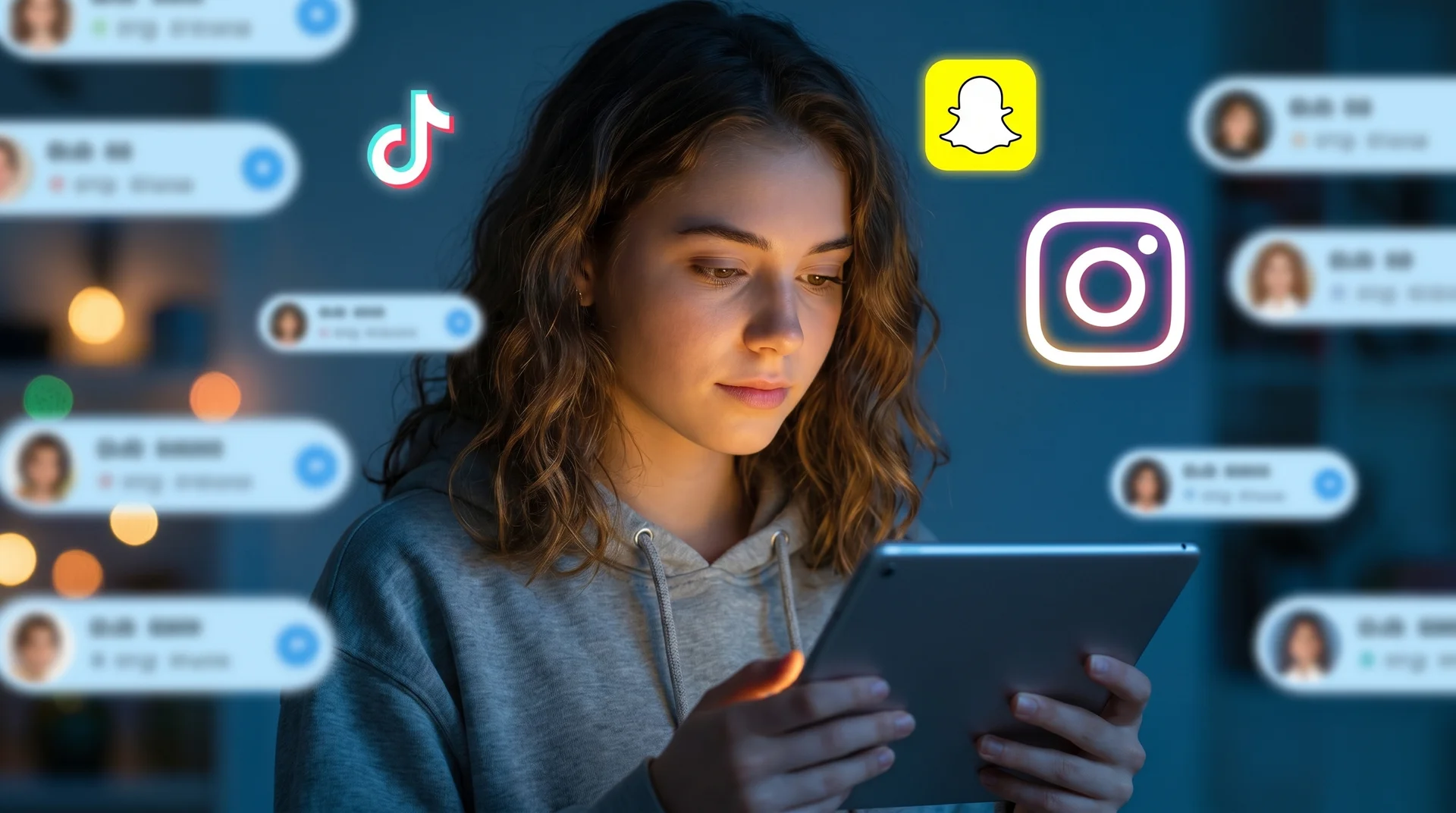
Two hundred and ten million people. That is the current estimate for social media addiction worldwide. Most of them do not think the number includes them.
The scale of social media addiction is difficult to grasp without data. The numbers below make the invisible visible.
Here are 10 statistics about social media addiction. All from published research. Some will confirm what you already suspected. A few will change how you think about the phone in your pocket.
1. An Estimated 210 Million People Are Addicted Worldwide
Social media addiction is not a fringe problem. It is a global one.
Current estimates suggest that approximately 210 million people worldwide suffer from social media or internet addiction. That is comparable to the population of Brazil. The number is growing every year as smartphone penetration increases and new platforms compete for attention.
Research published by the World Health Organization recognizes behavioral addictions as a growing public health concern. Social media addiction falls into this category. The mechanisms are the same as gambling addiction: variable rewards, compulsive engagement, and continued use despite negative consequences.
This is not a personal weakness. It is a population-level pattern.
2. Roughly 33 Million Americans Show Signs of Dependency
In the United States, approximately 10% of the population, or 33 million people, show signs of social media dependency. Among young adults aged 18 to 22, the number is significantly higher: about 40% self-report feeling addicted.
These figures come from self-reporting, which means the actual numbers are likely higher. People consistently underestimate their own usage. A study published in PLOS ONE found that people underestimate their phone usage by roughly 50%.
If 33 million is the number people admit to, the real number is worse.
3. Teens Spend 4.8 Hours Per Day on Social Media
Not total screen time. Social media alone.
A Common Sense Media report found that teenagers spend an average of 4.8 hours per day on social media platforms. That does not include screen time for school, homework, or other apps. Social media alone consumes nearly 5 hours of a teenager’s waking day.
Over a year, that is approximately 73 full days spent on social media. Over their teenage years, it adds up to nearly a full year of life. Want to see what your number looks like? The Screen Time Calculator shows the lifetime cost in days and years. Our deeper guide on social media addiction in teens covers what these hours do to a developing brain.
4. 46% of Teens Use the Internet “Almost Constantly”
Nearly half. Not “a lot.” Almost constantly.
The Pew Research Center found that 46% of teens aged 13 to 17 describe their internet use as “almost constant.” Social media is the primary driver. TikTok, YouTube, and Snapchat dominate daily usage, with the majority of teens reporting daily activity on at least one platform. The pull of short-form video is strong enough that TikTok addiction is now a category of its own.
This is not casual browsing. This is a state of near-permanent connection where the boundary between online and offline life has effectively dissolved.
5. Social Media Activates the Same Brain Circuits as Gambling
The comparison is not hyperbole. It is neuroscience.
The National Institute on Drug Abuse confirms that behavioral addictions, including social media use, activate the same dopamine reward pathways as substance addictions. The mechanism is called variable reward: sometimes you scroll and find something interesting, sometimes you do not. The unpredictability is what makes it addictive.
This is identical to the mechanism that drives slot machine gambling. The phone is a slot machine that fits in your pocket. You pull the lever every time you open an app. The fact that no money changes hands does not change the neurological impact.
6. Social Media Use Increases Anxiety by 13-66%
The relationship between social media and anxiety is not vague. It is measured.
A meta-analysis published in the Journal of Behavioral Addictions found significant associations between problematic social media use and increased anxiety, depression, and stress. Individual studies report anxiety increases ranging from 13% to 66% depending on usage intensity and population.
The relationship is bidirectional. Social media worsens anxiety. Anxiety drives more social media use. Each direction strengthens the other. The cycle is self-reinforcing, and without structural intervention, it accelerates.
7. Users Check Social Media an Average of 17 Times Per Day
Not phone checks. Social media checks specifically.
Research indicates the average user opens social media apps approximately 17 times per day. For heavy users, the number exceeds 30. Most of these checks are not deliberate. They are automatic. The behavior has become reflexive, below the level of conscious choice.
Each check is brief, usually under 3 minutes. But research from the University of California, Irvine found that it takes an average of 23 minutes to fully regain focus after a distraction. Seventeen checks per day means seventeen 23-minute recovery windows. The math is brutal: most of your productive focus is spent recovering from the last time you opened Instagram.
Your brain never fully disengages from social media because the next check is always minutes away. The interruption is not the 3-minute check. It is the 23-minute cognitive cost that follows it.
8. 70% of Teens Report Feeling Pressured by Social Media
Social media creates social pressure that did not exist before smartphones.
Research suggests approximately 70% of teenagers feel pressure to present themselves in a positive light on social media. The curated nature of feeds means every post is a performance. Teens compare their unedited lives to the highlight reels of their peers, creating a persistent gap between reality and expectation.
This pressure contributes to anxiety, depression, body image issues, and declining self-esteem. Social psychologist Jonathan Haidt documents in The Anxious Generation that this dynamic is a primary driver of the teen mental health crisis that began in 2012 and has accelerated since.
9. Social Media Addiction Rates Are Higher in Women and Young Adults
The distribution is not uniform. And the patterns reveal how platform design targets specific groups.
Studies suggest that women acknowledge higher rates of social media dependency than men, with approximately 32% of women reporting some level of addiction compared to 26% of men. The platforms most associated with female dependency tend to be image-based: Instagram, TikTok, and Pinterest. These platforms emphasize appearance, comparison, and social validation, which research links to higher rates of body dissatisfaction and anxiety in women.
Age is the strongest predictor. Young adults aged 18 to 22 report the highest rates of any demographic group, with approximately 40% self-reporting addiction. This aligns with neuroscience: the prefrontal cortex, responsible for impulse control, is not fully developed until the mid-20s. The demographic most vulnerable to addiction is also the demographic least equipped to resist it.
The numbers decline with age, but they decline slowly. Adults over 35 are not immune. They are simply less likely to recognize the pattern.
10. Only 5-10% of Addicted Users Seek Any Form of Help
This is perhaps the most concerning statistic. The vast majority of people who recognize they have a problem do nothing about it.
Research suggests that only 5 to 10% of people who identify their social media use as problematic take any action to change it. The rest continue the pattern while acknowledging it is harmful.
This is not surprising. Social media addiction is not yet widely recognized as a clinical condition. There is no obvious place to seek help. The behavior is socially normalized. And the platforms themselves are designed to make leaving feel worse than staying.
The gap between awareness and action is where the addiction lives.
What These Numbers Mean
Ten statistics. Each one points in the same direction.
Social media addiction is widespread, accelerating, and disproportionately affecting young people. The platforms are designed to create the behavior, the brain is wired to sustain it, and most people who recognize the problem do nothing about it.
The numbers do not change on their own. They change when the system changes.
Scrolletics changes the system by connecting screen access to physical exercise. Push-ups, squats, or planks unlock screen time. One rep earns one minute. Your phone counts reps automatically using on-device camera detection.
Instead of being another statistic, every screen session starts with movement. The compulsive pattern breaks because the friction changes the default. The brain still gets its dopamine, but through a pathway that builds rather than depletes.
Statistics Describe the Problem. Systems Solve It.
Two hundred and ten million people addicted worldwide. Thirty-three million in the United States alone. Teenagers spending nearly 5 hours a day on platforms designed to keep them there.
These numbers are not going to decrease on their own. The platforms are getting better at capturing attention, not worse.
The question is not whether social media addiction is real. The statistics settled that. The question is what you do about your own number.
Start with one change. One phone-free zone. One movement break. One evening where the phone charges in another room.
The scale of the problem is global. The solution starts with one person choosing to change the pattern.
Frequently Asked Questions
How many people are addicted to social media worldwide?
Current estimates place the number at approximately 210 million people globally who suffer from social media or internet addiction. In the United States, roughly 33 million people show signs of dependency. The World Health Organization recognizes behavioral addictions as a growing public health concern. For related research, see 12 scary facts about phone addiction.
What percentage of teens are addicted to social media?
Approximately one in three teenagers self-report feeling addicted to social media. The Pew Research Center found that 46% of teens use the internet almost constantly. Social media is the primary driver of this usage. For the broader impact on this generation, see Gen Z phone addiction and how to take a social media break.
Is social media addiction getting worse?
Yes. Global social media users have grown from 2.07 billion in 2015 to over 5 billion in 2025. Average daily usage has increased alongside the number of users. Short-form video, algorithmic feeds, and AI-generated content have made platforms more engaging and harder to leave. Every trend in the data points toward increasing rates of problematic use. See also: effects of excessive screen time.
What is Scrolletics and how does it address social media addiction?
Scrolletics changes the structure around screen access. You do push-ups, squats, or planks, and your phone counts reps automatically using on-device camera detection. One rep earns one minute of screen time. Instead of willpower-based approaches that statistics show consistently fail, the system creates a physical barrier between you and compulsive use. No recording, no uploads, fully private.