

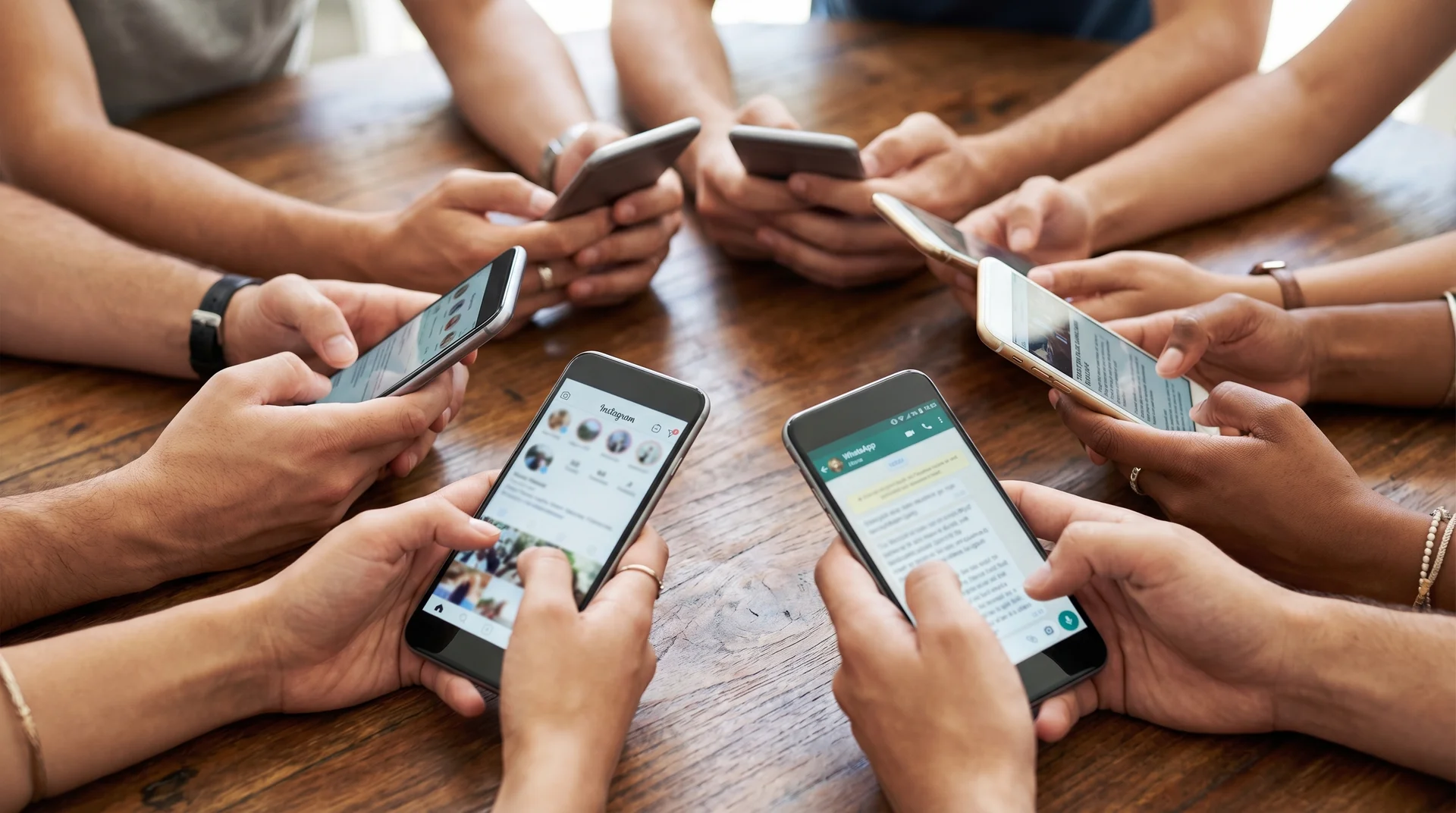
Doomscrolling in 2026 is the mildest version of what is coming.
The algorithms that keep you scrolling today are about to get significantly more powerful. The content supply is about to become unlimited. The devices delivering it are about to multiply. If doomscrolling is already a problem for you, the next decade will make it harder to manage, not easier.
This is not speculation. The trends driving the escalation are already in motion. Understanding what is coming is the first step toward building a defense that lasts.
Here are 5 trends that will make doomscrolling worse before it gets better.
Trend 1: AI Will Create Unlimited Content
Today, content supply is limited by human creators. That bottleneck is disappearing. Generative AI can produce text, images, and video at a scale and speed that no human workforce can match. The feed will never run dry.
This matters because doomscrolling relies on novelty. When the content runs out or becomes repetitive, the scroll eventually loses its pull. When AI ensures the content never runs out and is always fresh, the scroll has no natural limit.
The dopamine loop that drives doomscrolling depends on unpredictable rewards. AI-generated content provides exactly that: an endless, unpredictable stream calibrated to keep the reward system firing. The fuel supply for the loop becomes unlimited.
This shift is already happening. AI-generated articles, images, and short-form videos are flooding every major platform. The volume will only increase.
Trend 2: Algorithms Will Know You Better Than You Know Yourself
Current algorithms are already effective at predicting what holds your attention. They analyze watch time, scroll speed, pauses, clicks, and shares. Within days, they build a profile of your vulnerabilities.
AI is making these algorithms dramatically more sophisticated. Future systems will predict your emotional state, tailor content to your current mood, and adjust in real time based on your micro-responses. The feed will not just be personalized. It will be psychologically optimized for you, specifically, at this exact moment.
As the Center for Humane Technology has documented, current recommendation systems already exploit psychological vulnerabilities at scale. AI amplifies this capability by orders of magnitude.
This is why zombie scrolling will become even harder to recognize. When the content is perfectly calibrated to your attention patterns, the autopilot engages faster and disengages slower. You will not even notice the scroll has started.
Trend 3: New Devices Create New Scroll Surfaces
Smartphones are not the end point. AR glasses, smart watches, car displays, and ambient screens are expanding where and when content can reach you. The feed will follow you from the bedroom to the commute to the office to the dinner table.
Each new surface adds another trigger point for the habit loop. More devices mean more opportunities for the scroll to start and fewer moments of genuine disconnection. The concept of “putting the phone down” becomes meaningless when the content is on your wrist, in your glasses, or projected onto the surface in front of you.
The transition from one screen to many screens mirrors what happened with food availability. Decades ago, food was only available at meal times and specific locations. Today, it is everywhere, always. The digital environment is undergoing the same transformation. Content will be available on every surface, in every moment, with no effort required to access it.
Trend 4: Each Generation Starts With Less Resistance
Children growing up today have been exposed to algorithmically curated content from birth. Their baseline attention patterns are being shaped by infinite scroll, short-form video, and instant gratification.
Research on why children’s developing brains are more vulnerable to doomscrolling shows they already have weaker defenses than adults. The next generation will be raised in an even more saturated digital environment with even less built-in resistance to its pull.
This is a compounding problem. Each generation that grows up with more screen exposure develops attention patterns more suited to scrolling and less suited to sustained focus. The neurological baseline shifts. What feels like normal screen use today will be considered minimal in a decade.
The American Psychological Association reports rising rates of anxiety and attention difficulty across all age groups, a trend that correlates directly with increasing screen exposure. These numbers are not stabilizing. They are accelerating.
Trend 5: Regulation Cannot Keep Up
Legislation on digital wellness is years behind the technology it attempts to regulate. The EU’s Digital Services Act and proposed US social media age restrictions are steps forward, but they address current problems. By the time regulations take effect, the landscape has already shifted.
This is not a failure of intent. Regulation is structurally slow. Technology is structurally fast. The gap between what platforms can do and what laws restrict them from doing will continue to widen.
This matters because relying on regulation to protect your attention is like waiting for a seatbelt law while driving without one. Individual structural defense fills the gap between what platforms do and what laws require. It cannot wait for legislation to catch up.
Why the Diet Parallel Matters
Screen time management is following the same trajectory as diet.
Fifty years ago, nobody tracked what they ate. Then the food environment changed. Processed food, fast food, and sugar-dense products became available everywhere, always. Human biology could not keep up. The result was a health crisis followed by an entire industry built around managing consumption.
The same pattern is playing out with attention. The digital environment changed faster than human neurology could adapt. Infinite content, variable rewards, 24/7 access. The result is rising anxiety, fractured focus, declining sleep, and eroding presence.
The difference is speed. What the food environment took decades to accomplish, AI-powered digital feeds will accomplish in years. The mismatch between the environment and our biology is widening faster than it ever has before.
Just as people eventually built systems around food (meal planning, calorie tracking, dietary guidelines), people will build systems around screen time. The tools and habits that manage digital consumption are still in their early stages. But the need for them is no longer debatable.
What Actually Helps Now
The trends described above are not theoretical. They are happening now and accelerating.
Waiting for platforms to change their business model is not a strategy. Their business model depends on keeping you scrolling. Waiting for regulation is not reliable. The timeline is too slow.
The defense that works is structural and personal. It does not depend on the algorithm, the platform, or the law. It depends on what happens between you and the screen.
The most effective structural defense is building a physical barrier between the trigger and the scroll. When movement is required before screen access, the automatic reach-scroll-repeat loop cannot run unchecked. This approach works regardless of how sophisticated the algorithm becomes. AI can personalize the content. It cannot do your push-ups for you.
This is what Scrolletics does.
The app connects screen access to physical exercise. Push-ups, squats, or planks, counted automatically by your phone’s camera using on-device detection. One rep earns one minute of screen time. The structural barrier stays constant even as the algorithms evolve.
The Best Time to Build the Defense Is Now
Doomscrolling in 2026 is easier to manage than doomscrolling in 2030 will be. The content is less personalized. The algorithms are less sophisticated. The devices are fewer.
The habits you build now become your baseline. The structural defenses you put in place today will still work when the environment intensifies.
The Screen Time Calculator shows what your current habits project to over a year and a lifetime. The number is already significant. Under the trends outlined above, it will only grow.
Start now. Build the structure. Make screens follow effort. The future of doomscrolling is more of everything that already makes it hard to stop. Your defense needs to be in place before it arrives.
Frequently Asked Questions
What will doomscrolling look like in the future?
Doomscrolling will become more personalized, more immersive, and harder to resist as AI improves content targeting and new devices create additional screen surfaces. The core behavior will remain the same, but the algorithms driving it will become dramatically more effective at holding attention. Building structural defenses now is easier than building them later. See our guide on how to stop doomscrolling without willpower.
How will AI make doomscrolling worse?
AI will make doomscrolling worse in two ways. First, it enables unlimited content generation, ensuring feeds never run dry. Second, it makes algorithms more sophisticated at predicting individual behavior, tailoring content to exploit personal vulnerabilities in real time. Both changes remove the natural friction that currently gives people occasional off-ramps from the scroll. For practical techniques, see our guide on intentional scrolling.
Is doomscrolling going to be regulated?
Some legislation is emerging. The EU’s Digital Services Act and proposed US social media age restrictions are early steps. However, regulation consistently lags behind the technology it targets. By the time new rules take effect, platforms have already evolved. Structural personal defenses remain the most reliable protection regardless of the regulatory landscape.
What is Scrolletics and how does it protect against future doomscrolling?
Scrolletics inserts a physical barrier between you and the scroll. You do push-ups, squats, or planks, and your phone counts reps automatically using on-device camera detection. One rep earns one minute of screen time. This structural approach works regardless of how sophisticated algorithms become because it targets the behavior, not the content. No recording, no uploads, fully private.