

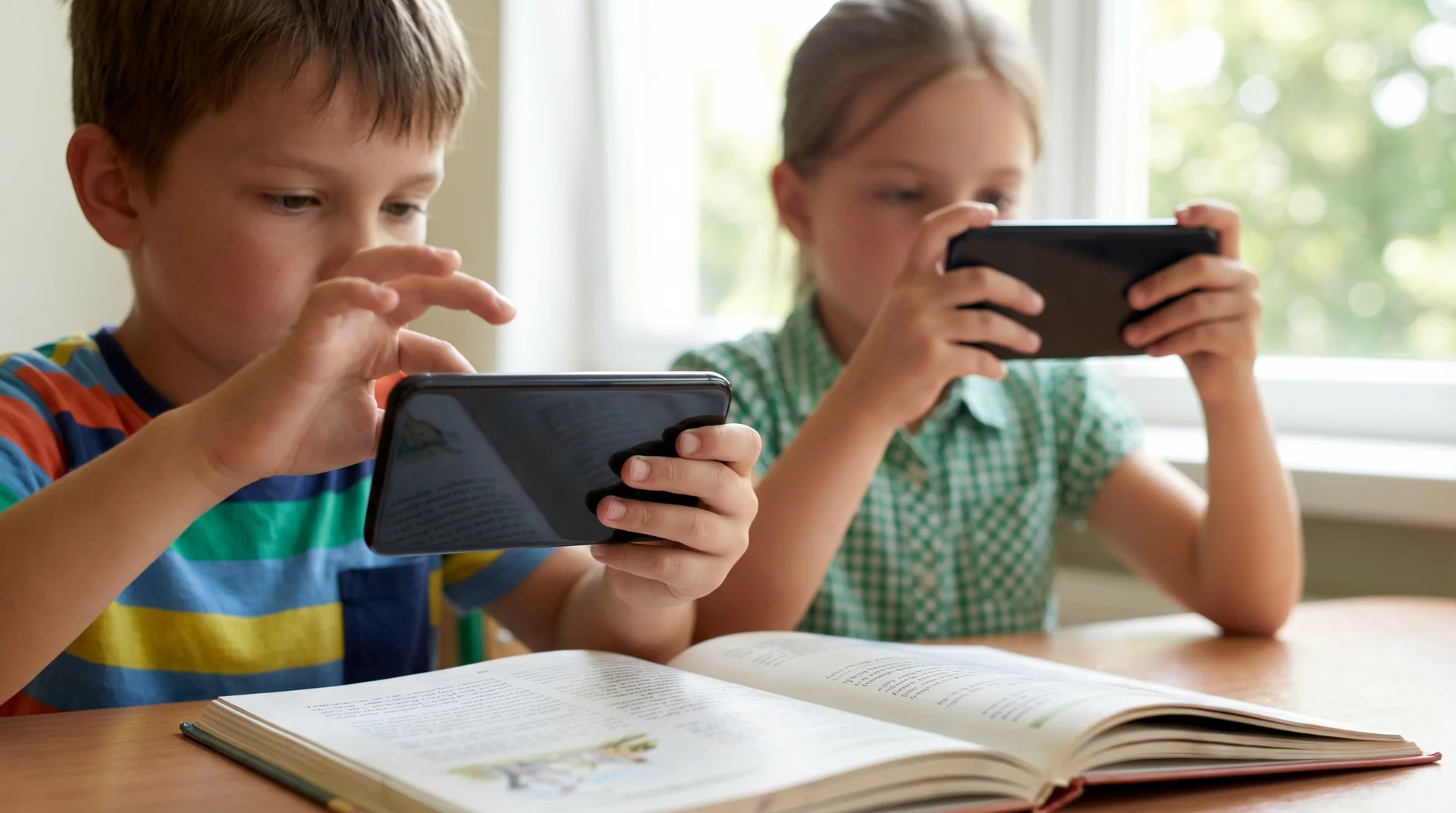
Your child is not doomscrolling the same way you are.
When adults doomscroll, the behavior is driven by habit, stress, and boredom. The brain knows what is happening, even if it struggles to stop. When children doomscroll, something different is occurring. Their brains are still under construction. The systems that would help them recognize the pattern, resist the pull, and choose to stop are not finished yet.
This is not about weak parenting or undisciplined kids. It is about biology, and it is also worth noting that parents’ own phone addiction shapes the environment children grow up in. The National Institute of Mental Health describes the adolescent brain as a work in progress, with the areas responsible for self-control among the last to mature. When a developing brain meets an algorithm designed to maximize engagement, the child is outmatched from the start.
Understanding why children are more vulnerable is the first step toward protecting them. These are not the same reasons adults get stuck. The developing brain creates specific weaknesses that platforms exploit, often without anyone realizing it.
Here are 5 reasons children are more vulnerable to doomscrolling than adults.
Reason 1: Their Brakes Are Not Built Yet
The prefrontal cortex is the part of the brain responsible for impulse control, planning, and decision-making. In adults, this region helps override the urge to keep scrolling. It is the part that says “put the phone down” and actually follows through.
In children, the prefrontal cortex is not fully developed. It does not reach maturity until the mid-twenties. For a 10-year-old, this brain region is decades away from full function.
This means children have weaker neurological brakes against compulsive behavior. When the algorithm serves another video, another post, another emotionally charged piece of content, the child’s brain has less capacity to say no. The urge wins more often because the system designed to stop it is not online yet.
Reason 2: The Reward System Hits Harder
Dopamine drives the compulsion to keep scrolling. Every new piece of content triggers a small dopamine release, and the unpredictability of what comes next amplifies the effect.
In children, the dopamine system is more reactive than in adults. The reward centers of the adolescent brain respond more intensely to novel stimuli. The same scroll that gives an adult a mild sense of engagement gives a child a stronger neurological reward.
This creates a steeper pull. The child’s brain learns faster that scrolling equals reward, and the association becomes more deeply embedded. By the time the behavior becomes a habit, it is more firmly wired than it would be in an adult who started the same pattern.
For a deeper look at how this dopamine loop works, see our guide on doomscrolling and dopamine.
Reason 3: They Cannot Tell When They Are Being Manipulated
Adults can recognize, at least intellectually, that algorithms are designed to keep them scrolling. They understand that outrage gets clicks, that thumbnails are chosen for maximum emotional impact, that the feed is curated to hold attention as long as possible.
Children do not have this awareness. The cognitive skills needed to evaluate media critically, identify emotional manipulation, and question why specific content is being shown develop gradually through adolescence.
A child scrolling through disturbing news, dramatic videos, or emotionally intense content does not think “this algorithm is manipulating me.” They think “the world is scary” or “this is important” or “I need to keep watching.” The content shapes their reality because they lack the filter to question it.
This is why doomscrolling distorts a child’s worldview more severely than an adult’s. The same pattern of consuming negative content that makes an adult feel temporarily anxious can make a child genuinely believe the world is dangerous and beyond repair.
Reason 4: Emotional Regulation Is Still Under Construction
When adults encounter distressing content while scrolling, they have access to years of emotional coping strategies. They can put the content in context. They can remind themselves that the news does not represent their immediate reality. They can choose to stop.
Children’s emotional regulation develops alongside the prefrontal cortex. The ability to manage strong emotions, step back from an emotional reaction, and calm down after being upset is still being built throughout childhood and adolescence.
When a child doomscrolls through negative or distressing content, the emotional impact lands harder. They are less able to process what they see, less able to separate the content from their own feelings, and less able to recover afterward. The American Psychological Association has consistently found that constant media consumption raises stress and anxiety levels, with younger age groups reporting the steepest increases.
This is why children often seem more irritable, anxious, or emotionally volatile after screen time. The effects of excessive screen time on a child’s brain compound when the content itself is emotionally intense. Doomscrolling delivers both the most harmful content and the most vulnerable audience at the same time.
Reason 5: The Algorithm Learns Them Faster
Social media algorithms build a profile of each user based on engagement patterns. What you watch, how long you watch it, what you scroll past, what makes you stop. The algorithm then serves more of what holds your attention.
Children engage with content differently than adults. They are more reactive, more likely to stop on emotionally charged content, and less likely to consciously curate their feed. The algorithm reads this behavior and quickly builds a profile that serves increasingly intense, emotionally provocative material.
The result is a feedback loop that accelerates faster for children. Within days, a child’s feed can shift from neutral content to a stream of anxiety-inducing material, each piece more emotionally gripping than the last. The algorithm is optimizing for engagement, and a child’s developing brain gives it exactly what it needs.
Why These 5 Reasons Compound
Each reason amplifies the others.
Weak impulse control means they cannot stop scrolling. A reactive dopamine system makes each scroll more rewarding. Lack of media literacy means they do not recognize the manipulation. Underdeveloped emotional regulation means the content hits harder. And the algorithm adapts to all of this faster than it does with adults.
The combined effect is a child who gets trapped in a doomscrolling pattern more quickly, more deeply, and with more psychological impact than an adult would in the same situation.
How much time is your child actually spending? The Screen Time Calculator converts daily screen hours into days per year and years per lifetime. When you see the number for a 10-year-old, the urgency becomes clear.
This is not a failure of parenting. It is a developmental mismatch. These platforms were designed for adult brains with fully developed self-control. When children access them, they are using tools their brains are not equipped to handle.
What Actually Helps
Telling your child to stop scrolling addresses the symptom, not the cause. Time limits help, but they still place you in the enforcer role. Blocking apps works until they find workarounds.
The most effective approach changes what happens before the scrolling starts.
When screen time requires physical movement first, the automatic reach for the phone is interrupted. The child must do something active before passive consumption begins. This serves two purposes: it breaks the doomscrolling trigger, and it gives the brain the stimulation it craves through a healthier source.
Research from Harvard Health confirms that even brief exercise releases endorphins and dopamine, providing the same neurological reward that scrolling offers but through a pathway that builds health instead of eroding it. For children, this matters even more because physical activity also supports the brain development happening during these critical years.
Movement also creates a clear sense of completion. Unlike scrolling, which has no natural end point, a set of exercises has a beginning, a middle, and a finish. For a brain that struggles with stopping, built-in stopping points make all the difference.
For practical earning ideas, see our guide on how kids can earn screen time.
This is where Scrolletics helps.
The app connects screen access to physical exercise. Children do push-ups, squats, or planks, and the phone counts reps automatically using on-device camera detection. One rep earns one minute of screen time. Parents stop being the enforcer. The system handles it.
Their Brains Are Not Broken
Your child’s brain is not broken. It is developing. And that development makes it more vulnerable to the pull of doomscrolling.
The platforms will not change their algorithms to protect your child. That responsibility falls to the environment around them. For a look at where these patterns are heading next, see our piece on the future of doomscrolling.
You do not need to monitor every scroll. You need a structure that changes what happens before the scrolling begins. When movement is the prerequisite, the doomscrolling pattern weakens on its own.
Small structural changes make a difference. Movement before screens. Consistent rules. Less enforcement, more system. The developing brain adapts to the environment it experiences. When that environment includes physical activity and intentional screen use, the brain develops healthier patterns.
The goal is not to eliminate screens. The goal is to make sure doomscrolling does not shape a brain that is still being built.
Frequently Asked Questions
Why are children more vulnerable to doomscrolling than adults?
Children’s brains are still developing in the areas that control impulse, attention, and emotional regulation. The prefrontal cortex does not fully mature until the mid-twenties, leaving children with weaker neurological brakes against compulsive scrolling. Their dopamine system is also more reactive, making the unpredictable rewards of social media feel more intense. Learn more about how doomscrolling exploits the dopamine system.
What are the signs that my child is doomscrolling?
Common signs include picking up the phone without a clear reason, becoming irritable or anxious after screen time, losing track of time while scrolling, resisting when asked to stop, and showing less interest in activities they used to enjoy. If your child consistently feels worse after using their phone, the scrolling has likely become compulsive. See our full guide on doomscrolling warning signs.
How can I help my child stop doomscrolling without constant arguments?
Replace the habit instead of just restricting it. Systems that connect screen access to physical activity remove parents from the enforcer role. When the rule is consistent and automatic, children stop negotiating. Movement provides the stimulation their brain craves through a healthier pathway. For specific earning ideas, see how kids can earn screen time.
What is Scrolletics and how does it help children who doomscroll?
Scrolletics connects screen access to physical exercise. Children do push-ups, squats, or planks, and the phone counts reps automatically using on-device camera detection. One rep earns one minute of screen time. This replaces the automatic scroll-reach pattern with movement, giving the developing brain dopamine through a healthier source. No recording, no uploads, fully private.