

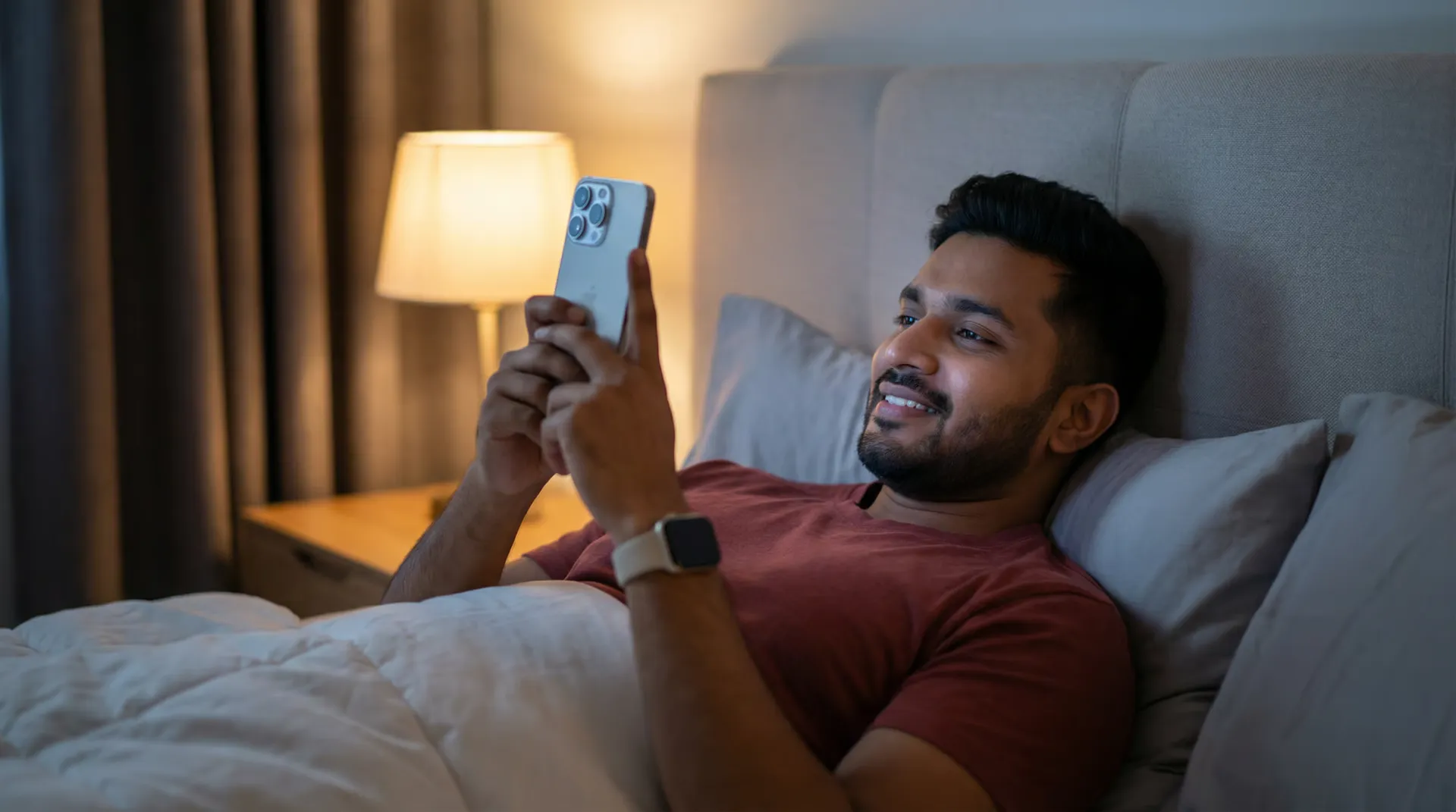
You check your phone 96 times a day.
That is the average, according to a report by Asurion. Some people check more. Some check less. But the number alone does not tell you whether you are addicted.
Phone addiction is not about how often you use your phone. It is about whether you can stop.
The difference between heavy use and addiction is control. If you use your phone a lot but can put it down when you need to, that is a habit. If you use your phone a lot and cannot stop even when it is hurting your sleep, your relationships, or your mental health, that is addiction.
Here are 6 signs that your phone use has crossed the line.
Sign 1: You Cannot Stop Checking
You put your phone down. Thirty seconds later, you pick it up again. There is no notification. No reason. Your hand just moved on its own.
This is the most basic sign of phone addiction: compulsive checking that happens without a conscious decision. The behavior is automatic. The brain has learned to associate certain moments (boredom, silence, transitions between tasks) with picking up the phone, and it executes the behavior without asking permission.
If you catch yourself checking your phone and cannot explain why, the behavior has moved from choice to compulsion.
Try this: set your phone on a table across the room and time how long it takes before you feel the urge to check it. If the urge appears within minutes, the compulsion is strong.
Sign 2: You Feel Anxious Without It
Your phone is in another room. Or the battery died. Or you left it at home.
Instead of feeling neutral, you feel uneasy. Restless. Like something is wrong. You cannot focus on what you are doing because part of your brain is thinking about the phone.
This is withdrawal. The same mechanism that makes someone anxious without alcohol or cigarettes makes you anxious without your phone. The brain has become dependent on the device for emotional regulation, and its absence creates discomfort.
The clinical term for this is nomophobia: the fear of being without your mobile phone. A study published in Computers in Human Behavior found that nomophobia is associated with higher levels of anxiety, lower attention spans, and reduced academic and work performance.
If being separated from your phone produces genuine anxiety, the relationship with the device has become a dependency.
Sign 3: You Need More to Feel the Same
You used to be satisfied checking social media once or twice a day. Now you check it every hour. The same content that used to hold your attention for a few minutes now barely registers.
This is tolerance. The brain adapts to repeated stimulation by becoming less responsive. The same amount of phone use produces less satisfaction over time, which drives you to use it more.
Tolerance is one of the hallmarks of addiction. It is the reason a casual drinker becomes a heavy drinker. It is the reason a recreational gambler becomes a compulsive one. And it is the reason your phone use keeps increasing even though it feels less rewarding.
If you notice that you are spending more time on your phone but enjoying it less, tolerance has set in. The brain is chasing a level of stimulation it can no longer reach through the same behavior.
Sign 4: You Neglect Responsibilities
The dishes are piling up. The deadline is approaching. Your partner asked you something ten minutes ago and you still have not responded because you are scrolling.
Phone addiction does not announce itself. It steals time in small increments. Five minutes here. Ten minutes there. Each moment feels insignificant. Together, they add up to hours of lost productivity, missed obligations, and neglected relationships.
The key indicator is not that you occasionally lose track of time. Everyone does that. The indicator is that it happens repeatedly, and you cannot seem to change the pattern even when you want to.
When phone use consistently interferes with work, household tasks, personal goals, or relationships, it has moved beyond a habit. It is functioning as an addiction.
Sign 5: You Use It to Escape Emotions
Something stressful happens. You reach for your phone. You feel anxious. You open an app. You are bored. You start scrolling.
Using the phone as an emotional escape is one of the clearest signs of addiction. The device has become a coping mechanism, the first response to any uncomfortable feeling.
This is not the same as occasionally distracting yourself with your phone. Everyone does that. The difference is when the phone becomes the only response to discomfort. When you cannot sit with boredom, stress, sadness, or frustration without reaching for the screen.
Over time, this pattern weakens your ability to process emotions naturally. The brain learns that discomfort can be avoided instantly, which reduces tolerance for any negative feeling. The result is increased emotional fragility and deeper dependence on the device.
If you notice that your phone is the first thing you reach for whenever something feels uncomfortable, the device is functioning as an emotional crutch.
Sign 6: You Keep Using Despite Knowing It Hurts You
This is the defining characteristic of addiction. Not the behavior itself. The inability to stop even when you know it is causing harm.
You know the phone is disrupting your sleep. You keep scrolling at midnight.
You know it is hurting your relationship. You keep checking during dinner.
You know it is affecting your mental health. You keep consuming content that makes you feel worse.
The gap between knowing and doing is where addiction lives. You have the information. You understand the consequences. But the behavior continues because the compulsion is stronger than the intention.
If you have tried to reduce your phone use and failed repeatedly, that is not a lack of willpower. That is addiction. The behavior has become self-sustaining, driven by neurological patterns that override conscious decision-making.
How Many Signs Did You Recognize?
One or two signs in isolation may indicate a strong habit that could use some adjustment.
Three or more signs together indicate phone addiction. The behavior has moved beyond your conscious control and is affecting your quality of life.
Recognizing the signs is important, but recognition alone does not change behavior. The brain does not stop a compulsive pattern just because you identified it.
Here is another way to measure it. The Screen Time Calculator takes your daily screen hours and shows the lifetime total in days and years. If the signs above felt familiar, the number will confirm what you already suspect.
The Difference Between Habit and Addiction
A habit is a behavior you do automatically. An addiction is a habit you cannot stop even when it hurts you.
Phone use exists on a spectrum. On one end is intentional, controlled use. On the other end is compulsive, harmful use. Most people are somewhere in the middle, and the line between habit and addiction is not always obvious.
The clearest test is this: can you go 24 hours without your phone (outside of work requirements) without significant distress?
If yes, you have a habit. It may be strong, but it is within your control.
If no, the behavior has characteristics of addiction. The dependency is real, and addressing it requires more than good intentions.
Why Willpower Is Not Enough
Phone addiction operates at the neurological level. The dopamine system, the habit loop, the emotional regulation patterns, all of these are below conscious awareness.
Telling yourself to use your phone less is like telling yourself to be less hungry. The drive is biological. It does not respond to logic.
This is why most attempts to “just use the phone less” fail. The intention is there. The neurological pull is stronger.
Effective change requires changing the system, not just the intention. The environment needs to change. The reward structure needs to change. The habit loop needs a new pathway.
What Actually Works
Change the environment. Remove apps from the home screen. Turn off notifications. Charge the phone in another room. Every barrier between you and the phone gives your conscious mind time to intervene.
Replace the behavior. The brain needs somewhere to go when the urge hits. Physical movement is the most effective replacement because it provides dopamine through a healthier pathway while also improving mood and focus.
Build awareness. Track your phone use. Most phones have built-in screen time reports. Seeing the actual numbers creates a reality check that motivation alone cannot provide.
Start small. You do not need to eliminate phone use. Start with one phone-free hour per day. One meal without the phone. One morning where you do not check it for the first 30 minutes. Small wins build momentum.
That idea is the foundation of Scrolletics.
The app changes your relationship with your phone by connecting screen access to physical movement. Short exercises like push-ups, squats, or planks unlock screen time. One rep earns one minute. Your phone counts reps automatically using on-device camera detection.
Instead of fighting the addiction with willpower, it redirects the dopamine system through movement. The phone is still available. But accessing it requires doing something beneficial first. Over time, this changes the pattern from compulsive to intentional.
The Pattern Can Change
Phone addiction is real. It is measurable. It affects sleep, relationships, mental health, and productivity.
But it is not permanent.
The 6 signs exist on a spectrum. Wherever you are on that spectrum, the pattern can shift. Not through willpower. Through system change.
Recognize the signs. Change the environment. Replace the behavior. Start small.
The phone does not have to control you. But you have to decide to take control back.
Frequently Asked Questions
What is considered phone addiction?
Phone addiction is compulsive smartphone use that persists despite negative consequences. It is characterized by 6 signs: inability to stop checking, withdrawal symptoms without the phone, tolerance (needing more screen time for the same effect), neglecting responsibilities, using the phone to escape emotions, and continued use despite knowing it is causing harm. Learn more about what causes screen time addiction.
How much screen time is considered phone addiction?
There is no specific number of hours that defines phone addiction. Someone who uses their phone 4 hours a day intentionally for work and communication is not addicted. Someone who uses it 2 hours a day but cannot stop checking, feels anxious without it, and neglects responsibilities because of it may be addicted. Addiction is defined by the relationship with the behavior, not the quantity. See also: symptoms of too much screen time.
Is phone addiction officially recognized as a disorder?
Phone addiction is not yet listed as a formal diagnosis in the DSM-5. However, the World Health Organization recognized gaming disorder in the ICD-11, and many researchers argue that smartphone addiction meets similar diagnostic criteria. The behavioral patterns, including tolerance, withdrawal, and compulsive use despite harm, mirror those of recognized behavioral addictions.
What is Scrolletics and how does it help with phone addiction?
Scrolletics changes your relationship with your phone by connecting screen access to physical movement. You do exercises like push-ups, squats, or planks, and your phone counts reps automatically using on-device camera detection. One rep earns one minute of screen time. Instead of fighting the addiction with willpower, it redirects the dopamine system through movement. No recording, no uploads, fully private.