

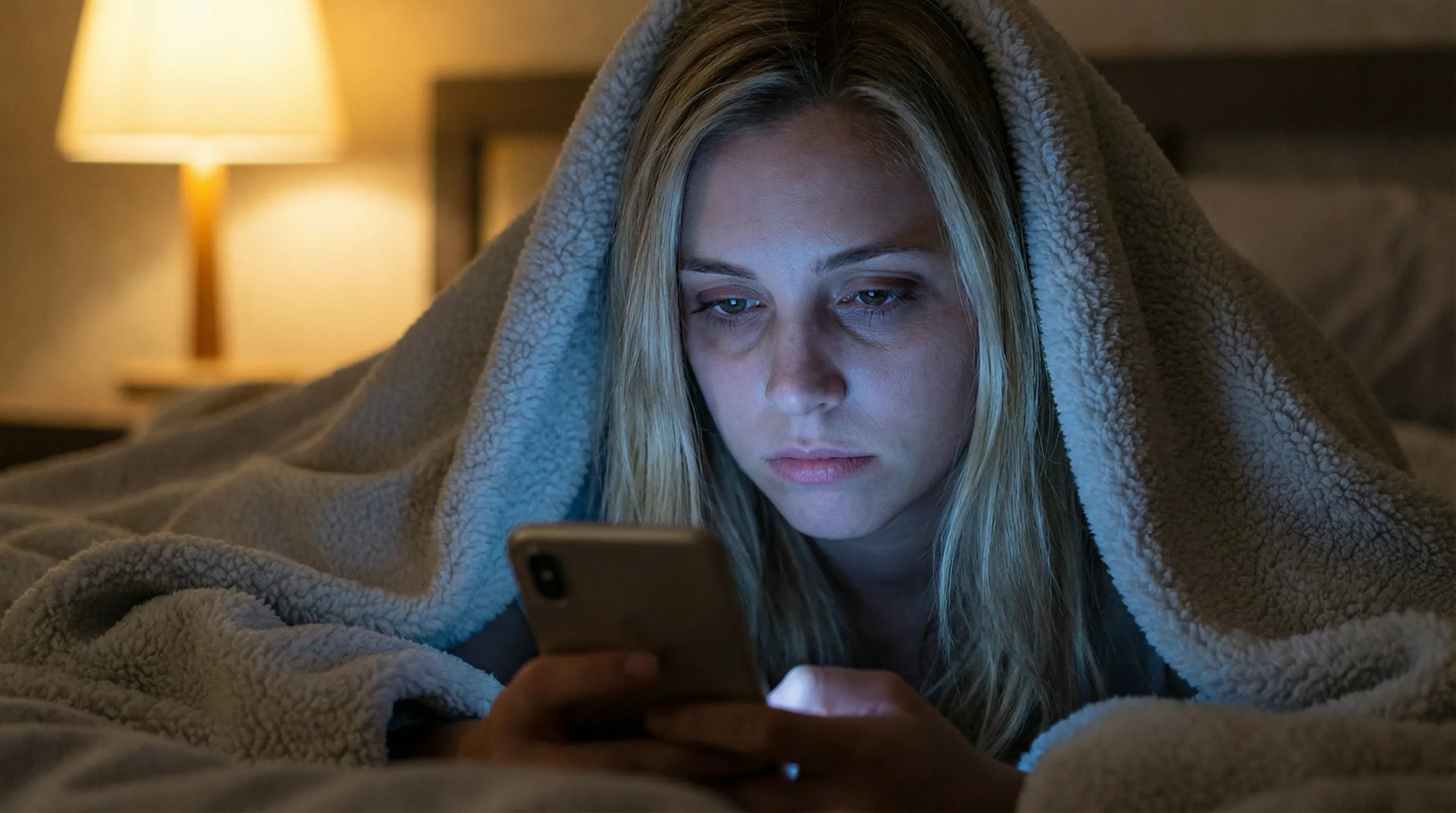
Most people do not realize they have a problem with screen time until something forces them to notice.
It starts with small signs that feel easy to ignore. A headache that will not go away. Restlessness when the phone is not nearby. The sense that time disappeared without explanation.
These are not isolated inconveniences. They are symptoms of a behavior pattern that has become automatic.
When screen time starts affecting how the body feels and how the mind functions, it is no longer just a habit. It has become something that needs attention.
What Too Much Screen Time Actually Looks Like
The question is not whether people use screens too much. The question is whether screen use is causing noticeable problems.
Symptoms show up differently for different people. Some notice physical changes first. Others realize their mood has shifted or their focus has declined.
What connects these signs is that they worsen over time when screen habits remain unchanged.
The Physical Signs That Appear First
The body responds to prolonged screen use in predictable ways.
Eye strain is often the earliest indicator. According to the American Optometric Association, staring at a screen reduces blink rate from the normal 15-20 times per minute to as few as 5, which dries out the eyes. Over time, this leads to redness, irritation, and difficulty focusing on objects at different distances.
Headaches become more frequent, especially tension headaches caused by straining to see small text or holding the neck in an uncomfortable position for extended periods.
Neck and shoulder pain develop from looking down at phones or sitting in fixed postures. The muscles in the upper back and neck remain tense without relief, which leads to stiffness and chronic discomfort.
Sleep disruption is another common physical symptom. Research from Harvard Medical School shows that blue light from screens interferes with melatonin production, making it harder to fall asleep. Even when sleep happens, the quality is often poor, leaving someone feeling unrested the next day.
The Mental and Emotional Symptoms Most People Miss
Physical symptoms are easier to identify because they cause immediate discomfort.
Mental and emotional changes happen more gradually, which makes them harder to recognize as related to screen time.
One of the clearest signs is anxiety when separated from the phone, a condition researchers call nomophobia. This can show up as nervousness, restlessness, or a constant urge to check for notifications even when there is no reason to expect any.
Focus becomes scattered. Tasks that used to require steady attention now feel exhausting or impossible to complete. The mind jumps between thoughts without settling on anything for long.
Mood begins to depend on what happens during scrolling sessions. Positive interactions or interesting content improve mood temporarily. Negative content, comparison, or lack of engagement leads to irritability or low mood.
This emotional dependency makes it difficult to feel stable without the phone nearby.
The Behavioral Patterns That Reveal a Problem
Symptoms are not limited to how someone feels physically or emotionally. They also show up in behavior.
Checking the phone without a clear reason is one of the most reliable indicators. Someone picks up the device automatically during transitions, pauses, or moments of boredom, even when they have no specific intention.
Time distortion happens frequently. What feels like a few minutes turns out to be much longer. Hours disappear into scrolling without any clear memory of what was seen.
Reduced productivity becomes noticeable. Tasks take longer to finish because attention keeps drifting back to the phone. Work that should require focus is interrupted repeatedly by the urge to check notifications or scroll through feeds.
Social interactions suffer. Conversations are interrupted by checking the phone. Time that could be spent with others is replaced by time spent alone with a screen.
Why These Symptoms Keep Getting Worse
Symptoms do not improve on their own.
The reason is that excessive screen time is not just about the amount of time spent on a device. It is about the habit loop that keeps someone returning to the screen without making a conscious choice.
Apps are designed to hold attention for as long as possible. As the Center for Humane Technology has documented, infinite scroll, autoplay, and algorithmic content create an environment where stopping requires effort rather than happening naturally.
This is why doomscrolling is such a common pattern. The feed provides just enough stimulation to keep someone engaged, but not enough satisfaction to create a clear stopping point.
Over time, the brain begins to expect this stimulation. When it is not available, restlessness and discomfort increase. The symptoms become a signal that the habit has moved beyond preference and into dependency.
One way to measure the scope: the Screen Time Calculator converts your daily screen hours into the total days per year and years of your life spent on your phone. Seeing the number alongside the symptoms makes the pattern harder to ignore.
Why Recognizing Symptoms Is Not Enough
Most people who experience these symptoms already know their screen time is excessive.
Awareness alone does not solve the problem. Knowing that something is wrong and knowing how to change it are not the same thing.
The advice people usually receive is to set limits, take breaks, or practice self-control. These suggestions assume that the issue is a lack of discipline.
In reality, willpower is not effective when the habit is automatic. Most screen time happens during moments when someone is tired, stressed, or mentally overloaded. These are the exact conditions where self-control is weakest.
This is why trying harder does not work. The habit needs to be replaced, not resisted.
What Happens When Movement Replaces the Default Response
Physical movement offers something that screens cannot provide.
It resets attention, releases energy, and creates a sense of completion. Unlike scrolling, which continues indefinitely, movement has a clear beginning and end.
When movement becomes the starting point for screen use rather than something that gets skipped, the symptoms begin to shift.
Eye strain decreases because screen sessions become shorter and more intentional. Headaches lessen as posture improves and time spent sitting in fixed positions decreases.
Mental clarity returns because the brain is no longer overstimulated by constant feeds. Anxiety around phone separation reduces because access is tied to a predictable action rather than constant availability.
Mood stabilizes because screen time becomes something earned through a positive action rather than a default escape during uncomfortable moments.
A System That Makes Movement Automatic
The goal is not to eliminate screens entirely. The goal is to stop letting them replace movement and time without noticing.
This requires a system that makes movement the gateway to screen access rather than an interruption.
That idea is the foundation of Scrolletics.
Rather than relying on willpower or setting arbitrary limits, the app connects screen time to physical activity. Short exercises like push-ups, squats, or planks unlock screen time minutes. One rep earns one minute.
Over time, this changes the habit loop. Movement becomes automatic because it is required before scrolling. Screen use becomes more intentional because it follows an action that requires thought and effort.
The symptoms do not disappear immediately, but they begin to improve as the balance between movement and screen time shifts.
When Symptoms Signal Something Deeper
For most people, symptoms of too much screen time are a sign that a habit has become automatic and needs adjustment.
Recognizing the symptoms is the first step. Understanding why they persist is the second. Replacing the habit with a better system is what creates lasting change.
If screen time has stopped feeling optional, movement is the most reliable way to restore balance.
Frequently Asked Questions
What are the first signs of too much screen time?
The earliest signs are usually physical: eye strain, dry eyes, headaches, and neck or shoulder pain. Mental symptoms follow, including anxiety when separated from your phone, scattered focus, and mood that depends on what happens during scrolling sessions. If you notice time disappearing without explanation, that is a strong behavioral indicator.
Can too much screen time cause anxiety and depression?
Yes. Research from the American Psychological Association links excessive screen time to increased anxiety and depressive symptoms. Constant stimulation keeps the nervous system in a heightened state, while social media exposure to curated content creates comparison and inadequacy. The dopamine patterns from scrolling can also make other activities feel unrewarding. Learn more about how screen time affects mental health.
How do I know if my screen time has become a problem?
Look for consequences rather than counting hours. If screen time is disrupting your sleep, replacing physical activity, affecting your mood, or causing you to check your phone without a clear reason, the habit has crossed into problematic territory. Multiple symptoms appearing together signals an urgent need for change. See also: the effects of excessive screen time.
What is Scrolletics and how does it help with screen time symptoms?
Scrolletics is an iOS app that makes movement the gateway to screen access. You do exercises like push-ups, squats, or planks, and your phone counts reps automatically using on-device camera detection. One rep earns one minute of screen time. This reduces eye strain by creating natural breaks, improves mood through exercise, and makes screen sessions shorter and more intentional. No recording, no uploads, fully private.