

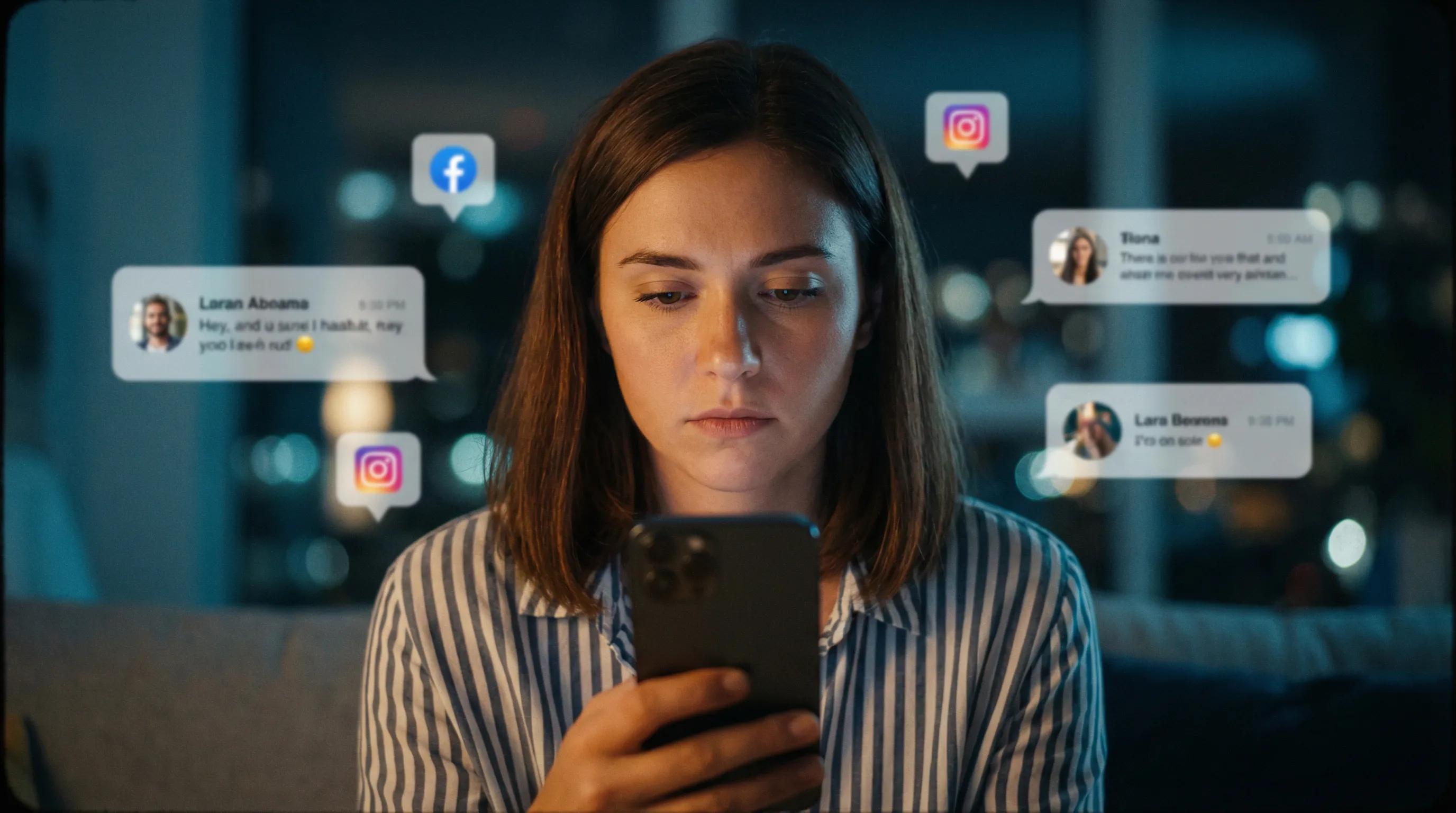
Most people who struggle with screen time have already tried to fix it themselves.
They deleted apps. Set timers. Made promises. And for a while, it worked. Then stress hit, or boredom crept in, or they just forgot why they were trying so hard. The apps came back. The hours returned. The guilt doubled.
If this sounds familiar, you are not weak. You are fighting a system designed by thousands of engineers to keep you scrolling. Willpower was never going to be enough.
Treatment for screen time addiction is not about trying harder. It is about understanding what is actually happening in your brain and building systems that work with your psychology instead of against it.
Why Screen Time Addiction Requires Treatment
Your brain has physically changed.
That is not an exaggeration. Repeated screen use rewires dopamine pathways. Your brain now expects the constant stimulation that scrolling provides. When you try to stop, it pushes back.
The restlessness you feel without your phone? That is withdrawal. The irritability when you cannot check notifications? Withdrawal. The way your mind keeps drifting back to your device even when you are doing something else? Your brain demanding its fix.
These symptoms are real. They are neurological. And they explain why willpower alone keeps failing.
Treatment works by giving your brain what it actually needs: alternative sources of reward, new patterns that stick, and systems that make the right choice easier than the wrong one.
Understanding the Root Causes
Screen addiction rarely exists on its own. It is almost always filling a gap.
Ask yourself: what do you get from scrolling? Be honest. The answer reveals what treatment needs to address.
- Escape from anxiety – Your phone offers distraction from racing thoughts. The scroll becomes a refuge.
- Relief from low mood – When everything feels hard, screens require nothing from you. Easy engagement for a depleted mind.
- Connection – Social media feels like being with people, even when you are alone. The illusion of belonging.
- Something to do – Boredom is uncomfortable. Screens eliminate it instantly, endlessly.
- Decompression – After a hard day, scrolling feels like rest. Even though it leaves you more drained.
Treatment that ignores these needs will fail. You cannot just remove the phone. You have to replace what it was giving you.
The Role of Dopamine in Treatment
Dopamine explains why everything else feels boring now.
Your phone delivers unpredictable rewards constantly. A notification. An interesting post. A video that hooks you. Each one triggers a small dopamine hit. Your brain learns to expect this, and it recalibrates.
The result: activities that used to feel satisfying no longer do. Hobbies feel pointless. Exercise feels like a chore. Conversations feel slow. Your brain has been trained to expect faster, easier rewards. Real life cannot compete.
Treatment reverses this. It gives your brain dopamine from sources that build you up instead of wearing you down.
Physical movement is the most effective alternative. Exercise triggers dopamine naturally, but differently. The reward comes from completing something real. You finish a workout and feel accomplished. That feeling is dopamine too, but it leaves you stronger instead of emptier.
Breaking the Habit Loop
Every habit has three parts: a trigger, a behavior, and a reward.
For screen addiction, the trigger is usually discomfort. Boredom. Stress. Anxiety. A moment with nothing to do. The behavior is reaching for your phone. The reward is the relief or stimulation it provides.
This loop runs thousands of times until it becomes invisible. You do not decide to pick up your phone. Your hand just moves. The trigger fires, and the behavior follows before you even notice.
Treatment interrupts this loop. It inserts a different behavior between the trigger and the reward.
When discomfort appears, instead of reaching for the phone, you do something else. Movement. A few deep breaths. A walk outside. The key is that the new behavior has to provide its own reward. Otherwise, your brain will reject the substitution.
Self-Directed Treatment Approaches
You do not necessarily need a therapist. Many people recover on their own with the right approach.
Change your environment – Delete the apps that pull you in hardest. Turn off notifications. Charge your phone in another room at night. Make the automatic behavior harder to perform.
Schedule your screen time – Instead of using screens whenever the urge hits, pick specific windows. Mornings are off-limits. Evenings have a cutoff. The structure breaks the automatic quality of the habit.
Find replacements – Figure out what need your phone is meeting. Then find something healthier that meets the same need. Bored? Have a book ready. Anxious? Try a breathing exercise. Lonely? Call someone instead of scrolling.
Move before you scroll – Make physical activity the price of screen access. Ten push-ups before you open Instagram. A walk before you watch YouTube. Movement interrupts the reflex and provides its own reward.
Tell someone – Accountability matters. When someone else knows your goal, you are more likely to stick with it. Regular check-ins keep you honest.
The best results come from combining these. Environment reduces temptation. Replacements meet your needs. Movement rewires your reward system.
A good starting point is seeing the actual cost. The Screen Time Calculator shows how your daily screen hours translate into days per year and years of your life. That number often provides the clarity that motivation alone cannot.
When Professional Treatment Is Needed
Sometimes self-help is not enough. There is no shame in that.
Consider professional treatment if:
- Your screen use is damaging relationships, work, or school
- You have tried multiple times to cut back and failed
- You suspect anxiety, depression, or ADHD is driving the behavior
- Withdrawal symptoms are severe enough to disrupt your day
- You feel genuinely unable to control yourself, even when you want to
Professional treatment typically includes:
Psychiatric evaluation – A professional can assess whether an underlying condition is fueling your screen use. Treating anxiety or depression often reduces the need for digital coping.
Individual therapy – One-on-one sessions to understand your triggers and build healthier responses.
Cognitive behavioral therapy (CBT) – A structured approach that changes the thought patterns driving compulsive use. Evidence-based and effective.
Group therapy – Connecting with others who understand. Reduces shame. Provides support from people who get it.
Family involvement – For teenagers especially, parents need to be part of the solution. Treatment works better when the home environment supports it.
Why Movement Is Central to Treatment
Across every treatment approach, one thing keeps showing up: movement.
Movement gives your brain what screens promise but never deliver:
- Dopamine that builds you up instead of wearing you down
- A sense of completion (you finished something real)
- Actual stress relief, not just distraction from stress
- Better sleep, which makes everything else easier
- A genuine break, not just a different screen
For many people, movement is the treatment. Not therapy. Not medication. Just building physical activity into the structure of daily life.
When movement becomes the gateway to screens, the habit loop rewires itself. The trigger that used to send you to your phone now sends you to exercise first. Screen time becomes intentional because it follows effort.
Making Treatment Sustainable
The goal is not to quit screens forever. That is unrealistic, and for most people, unnecessary.
The goal is to restore choice. Right now, screens control you. Treatment flips that. You control when and how you use screens.
Sustainable recovery creates new defaults. Movement becomes automatic. Screen use becomes deliberate. The compulsive quality fades because the underlying patterns have changed.
This takes time. Habits built over months or years do not disappear in a week. But with the right structure, lasting change is possible. Not through willpower. Through systems.
A System That Supports Recovery
The hardest part of treatment is not starting. It is maintaining.
Motivation fades. Stress returns. Old habits reassert themselves exactly when you are least equipped to fight them. This is when most recovery efforts fail.
Willpower cannot sustain treatment long-term. Systems can.
This is the foundation of Scrolletics.
The app connects screen access directly to physical movement. You do the exercises. The phone recognizes them automatically. Minutes are earned. No decision required. No willpower depleted. The system handles it.
Over time, movement becomes your natural response to the urge to scroll. You do not have to remember. You do not have to resist. The structure does the work, and the habit changes because the environment changed.
When Treatment Changes Everything
Screen time addiction is not a character flaw. It is not weakness. It is not a lack of discipline.
It is the predictable result of technology designed to capture attention, combined with a brain that evolved long before screens existed. You were set up to struggle. Recognizing that is the first step toward recovery.
Treatment works. Not by making you try harder, but by changing the systems around you. Address the root causes. Provide alternative rewards. Build new habits that support you instead of draining you.
If screen time has stopped feeling like a choice, it can become one again. The pattern can change. You can change it. But not through willpower alone. Through structure. Through systems. Through treatment that actually works.
Frequently Asked Questions
What is the best treatment for screen time addiction?
The most effective treatment combines environmental changes, habit replacement, and building systems that make healthy choices automatic. Self-directed approaches include removing triggers, scheduling screen-free times, replacing scrolling with physical movement, and creating accountability. Professional treatment like cognitive behavioral therapy is recommended when self-directed approaches are not enough. See also: what causes screen time addiction.
Is screen time addiction a real addiction?
Yes. The National Institute on Drug Abuse confirms that behavioral addictions activate the same dopamine reward circuits as substance addictions. Screen time addiction involves tolerance buildup, withdrawal symptoms, compulsive use despite negative consequences, and difficulty stopping. The mechanisms are real and measurable, even though no chemical substance is involved.
When should I seek professional help for screen addiction?
Seek professional help if self-directed approaches have failed repeatedly, if screen use is causing significant problems in relationships, work, or school, if you experience severe anxiety or depression related to screen use, or if you suspect an underlying mental health condition is driving the compulsive behavior.
What is Scrolletics and how does it support screen addiction treatment?
Scrolletics supports treatment by changing the reward structure around screen use. Instead of fighting the urge to scroll, it redirects it through physical exercise. You do push-ups, squats, or planks, and your phone counts reps automatically using on-device camera detection. One rep earns one minute of screen time. This provides alternative dopamine, interrupts the habit loop, and makes screen access intentional. No recording, no uploads, fully private.