

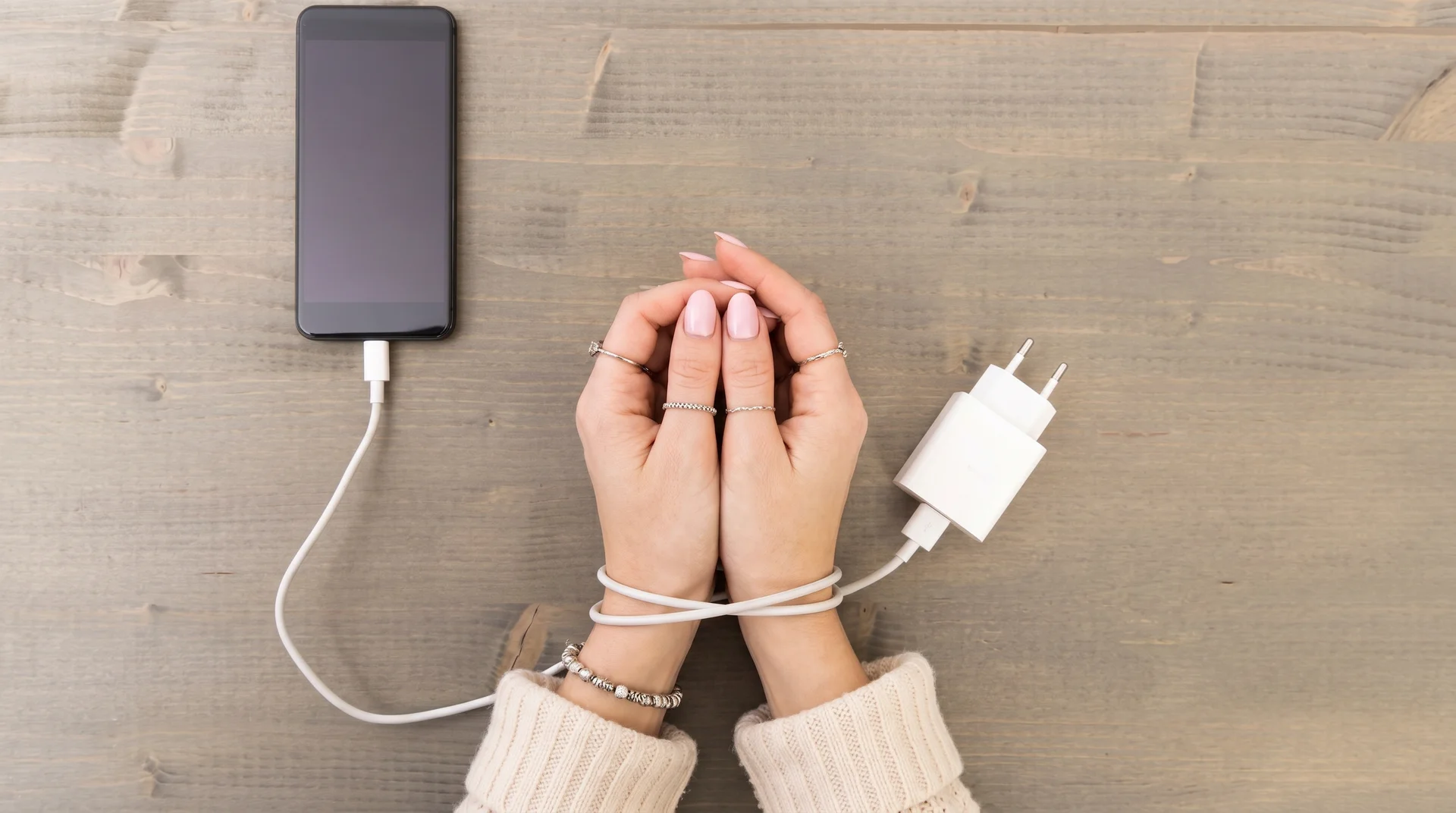
Nobody calls it a substance. But the brain does not know the difference.
The dopamine released when you check your phone is the same dopamine released by nicotine, alcohol, and cocaine. Not a similar chemical. The same chemical, acting on the same receptors, through the same reward pathway.
This comparison is not dramatic for effect. It is the conclusion of neuroscience research from the National Institute on Drug Abuse, the American Psychological Association, and dozens of peer-reviewed studies over the past decade.
Here are 5 specific ways phone addiction and drug addiction compare, where the analogy breaks down, and what it means for how you think about the device in your pocket.
1. Both Hijack the Same Dopamine Pathway
Every addictive substance works by increasing dopamine in the brain’s reward circuit. Nicotine does it. Alcohol does it. Cocaine does it. Your phone does it.
When you receive a notification, a like, or find an interesting post, your brain releases dopamine. The reward pathway registers the experience as something worth repeating. The more you repeat it, the stronger the neural connection becomes.
The National Institute on Drug Abuse confirms that behavioral addictions, including phone use, activate the same dopamine pathways as substance addictions. Brain imaging studies show overlapping activation patterns between people addicted to their phones and people addicted to drugs.
The mechanism is called reinforcement learning. The brain learns: this behavior produces a reward. Repeat it. The chemical messenger is identical whether the trigger is a cigarette or a notification.
2. Both Create Tolerance
With drug addiction, tolerance means you need a larger dose to achieve the same effect. One drink becomes two. Two become four.
Phone addiction follows the same pattern. The first time you checked social media, a few likes felt exciting. Now, the same number barely registers. You need more content, more novelty, more engagement to feel the same level of satisfaction.
This is dopamine tolerance. The brain adapts to the flood of rewards by reducing its sensitivity. The receptors downregulate. The baseline shifts. Activities that used to feel rewarding, such as reading, cooking, or conversation, start to feel flat because the brain has recalibrated to expect phone-level stimulation.
A study published in PLOS ONE found that heavy phone users show reduced grey matter in the anterior cingulate cortex, a brain region involved in emotional regulation and reward processing. The structural changes mirror patterns seen in substance addiction.
You are not imagining that your phone is less satisfying than it used to be. Your brain has adapted to it the same way it adapts to any repeated chemical stimulus.
3. Both Produce Withdrawal Symptoms
Take a drug addict’s substance away. They become anxious, irritable, restless, unable to focus. Their mood drops. They feel a compulsive urge to use.
Now take someone’s phone away.
Research consistently shows that phone withdrawal produces measurable physiological and psychological symptoms. A study published in the Journal of Behavioral Addictions documented increases in anxiety, irritability, difficulty concentrating, and restlessness when participants were separated from their phones. Heart rate and blood pressure increased. Cortisol levels rose.
These are not metaphorical symptoms. They are measurable, physiological stress responses identical in pattern to those observed in substance withdrawal.
Approximately 44% of adults report feeling anxious when separated from their phone. For teenagers, the number is 66%. The withdrawal is real. The fact that no chemical substance is being withheld does not change the brain’s response to losing its primary source of dopamine.
4. Both Damage Relationships
Substance addiction destroys relationships through neglect, broken promises, and eroded trust. The addicted person is physically present but emotionally absent. They prioritize the substance over the people who matter to them.
Phone addiction follows the same pattern. Researchers at Baylor University found that “phubbing,” the act of snubbing someone in favor of your phone, directly reduces relationship satisfaction. Partners report feeling less important, less connected, and less trusting.
The parallel is precise. In both cases, the addicted person chooses the source of dopamine over the person sitting next to them. The drug is different. The relational damage is the same.
Phone addiction adds a dimension that substance addiction does not: the illusion of connection. Social media makes it feel like you are socializing when you are actually isolating. The person scrolling through their feed believes they are connected to hundreds of people while the person beside them feels invisible.
5. Both Get Worse Without Intervention
Drug addiction does not plateau. Without intervention, it escalates. Tolerance increases, usage grows, consequences compound, and the person’s ability to stop deteriorates as the addiction strengthens.
Phone addiction follows the same trajectory. Screen time data consistently shows that usage increases year over year. The platforms get better at capturing attention, not worse. The content becomes more personalized. The algorithms become more sophisticated. Without a structural change, the pattern deepens.
The World Health Organization recognizes behavioral addictions as a growing public health concern for exactly this reason. The progression is consistent: casual use becomes habitual use, habitual use becomes compulsive use, and compulsive use becomes dependency.
Approximately 5 to 10% of people who recognize their phone use as problematic take any action to change it. The rest continue the pattern while acknowledging it is harmful. This gap between awareness and action is a hallmark of addiction, regardless of whether the substance is chemical or digital.
Where the Comparison Breaks Down
The comparison is real. It is also incomplete.
Phone addiction does not cause organ failure. It does not cause overdose. It does not directly kill people. The physiological consequences of substance addiction are more severe and more immediate. Someone addicted to alcohol can die from withdrawal. Someone addicted to their phone cannot.
Phone addiction is also not illegal. It is not stigmatized. It is not treated as a medical condition. There are no rehabilitation centers for scrolling. There are no support groups for notification checking. The behavior is so normalized that pointing it out feels like overreacting.
This normalization is part of what makes phone addiction dangerous. Substance addiction is visible, stigmatized, and recognized. Phone addiction is invisible, accepted, and ignored. The person struggling with it receives no support because no one, including themselves, considers it a real problem.
The brain does not share this opinion. The brain responds to phone addiction with the same neural patterns it uses for any other dependency. The fact that society does not recognize it does not change the neuroscience.
What This Means for You
If you have ever felt anxious without your phone, needed more screen time to feel satisfied, damaged a relationship through phone use, or been unable to reduce your usage despite wanting to, you have experienced the same addiction pattern that defines substance dependency.
This is not a moral judgment. It is a neurological fact. The phone was designed to create this pattern. Recognizing it is the first step to changing it.
Scrolletics addresses the structural root of the pattern. The app connects screen access to physical exercise. Push-ups, squats, or planks. Your phone counts reps automatically using on-device camera detection. One rep earns one minute.
Addiction treatment works by changing the environment around the behavior. Scrolletics does the same thing for your phone. The compulsive loop breaks because the friction changes the default.
Want to see how much time your phone habit consumes? The Screen Time Calculator converts daily hours into lifetime days and years. The number usually makes the comparison feel less abstract.
The Neuroscience Does Not Care What You Call It
Five parallels. Same dopamine pathway. Same tolerance. Same withdrawal. Same relationship damage. Same escalation without intervention.
The only meaningful differences are that phone addiction is socially normalized, legally unrestricted, and available 24 hours a day in your pocket.
You do not need to call it addiction to change the behavior. You do not need a diagnosis. You just need a system that interrupts the pattern before it deepens.
Start with awareness. Notice when you reach for the phone without deciding to. Notice the anxiety when you cannot check it. Notice the relationships that have thinned.
Then change one thing. One phone-free zone. One notification turned off. One physical action before the scroll.
The brain rewires in both directions. The same neuroplasticity that created the pattern can reverse it.
Frequently Asked Questions
Is phone addiction similar to drug addiction?
Yes. Phone addiction and drug addiction activate the same dopamine reward pathways. Both create tolerance, produce withdrawal symptoms, damage relationships, and escalate without intervention. The National Institute on Drug Abuse confirms that behavioral addictions involve the same brain circuits as substance addictions. For more on the neuroscience, see why you are addicted to your phone and 8 causes of phone addiction.
Can phone addiction change your brain like drugs do?
Research shows that heavy phone use produces measurable brain changes, including reduced grey matter in areas associated with impulse control. The dopamine system recalibrates the same way it does with substance use. These changes are reversible with sustained behavioral change. For related research, see 12 scary facts about phone addiction.
Where does the comparison between phone and drug addiction break down?
Phone addiction is not chemically toxic. It does not cause organ failure, overdose, or direct physical death. The physiological consequences of substance addiction are more severe and immediate. However, the behavioral, neurological, and psychological patterns are remarkably similar. For the broader health impact, see effects of excessive screen time.
What is Scrolletics and how does it address phone addiction?
Scrolletics changes the structure around screen access, similar to how addiction treatment changes the environment around substance use. You do push-ups, squats, or planks, and your phone counts reps automatically using on-device camera detection. One rep earns one minute of screen time. This creates a physical barrier that interrupts the compulsive loop. No recording, no uploads, fully private.