

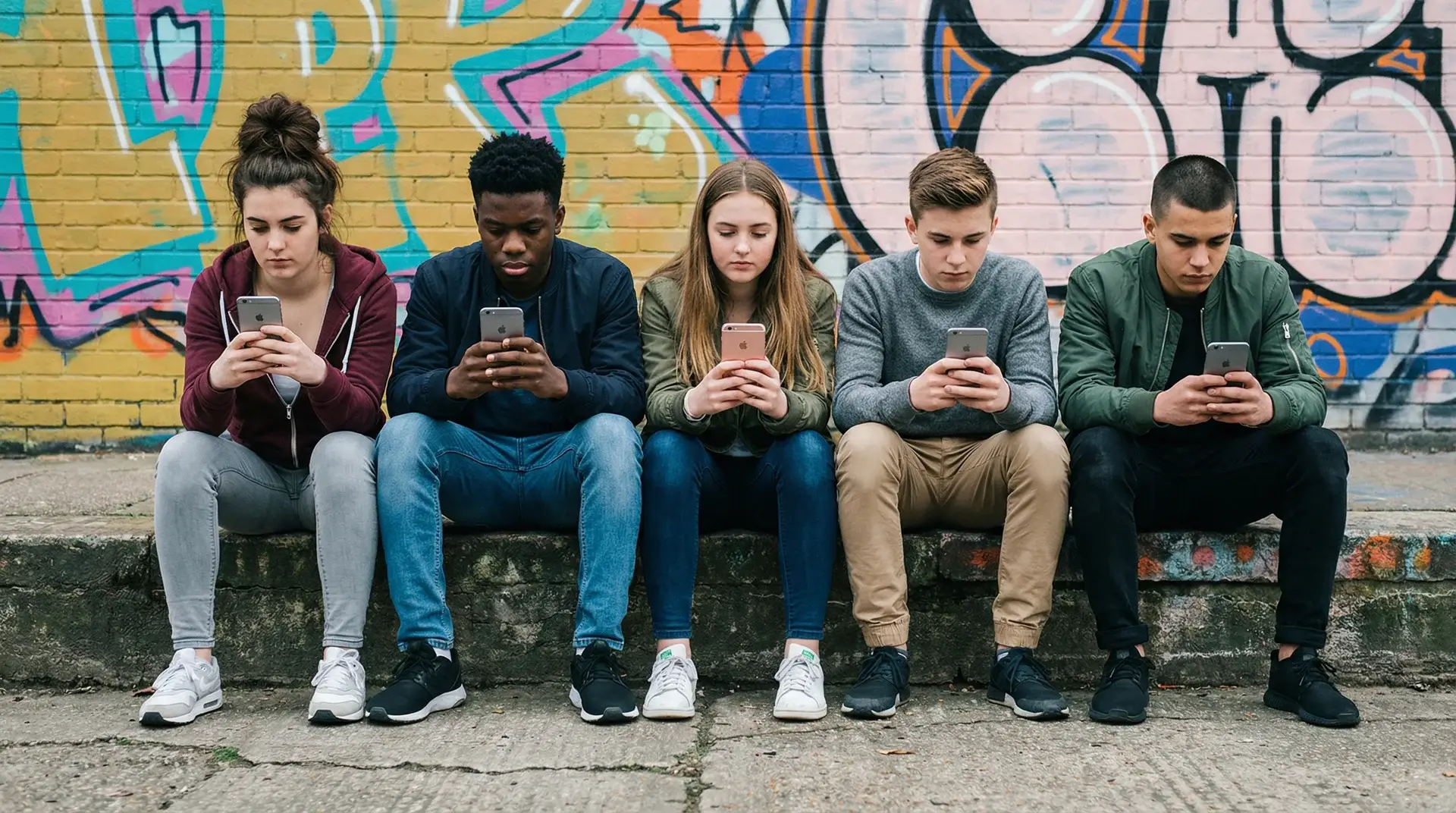
Gen Z did not choose phone addiction. Phone addiction chose them.
They are the first generation that has never known a world without smartphones. The iPhone launched in 2007. The oldest members of Gen Z were 10. The youngest were not born yet. By the time they were old enough to form habits, the most addictive technology in human history was already in their hands.
This is not a story about lazy kids staring at screens. This is a story about what happens when developing brains meet technology designed to exploit them.
Here are 7 ways phone addiction is reshaping an entire generation.
1. Attention Spans Are Shrinking
Gen Z has grown up with content designed to be consumed in seconds. TikTok videos. Instagram stories. Snapchat streaks. The average piece of content they consume lasts under 60 seconds.
The brain adapts to what it practices. A brain that practices 15-second attention bursts thousands of times per day becomes a brain that struggles with anything longer.
Research from Microsoft found that the average human attention span dropped from 12 seconds in 2000 to 8 seconds in 2015. For Gen Z, who grew up entirely in the smartphone era, the number is likely lower.
This is not a discipline problem. It is a training problem. The brain was trained on short-form content during the years when attention systems were still developing. Now those systems are calibrated for bursts, not sustained focus.
Reading a book for 30 minutes feels impossible. Not because the book is boring. Because the brain was never trained to sustain attention that long without a dopamine hit.
2. Anxiety and Depression Are at Record Levels
If you are part of Gen Z, you already know this. You can feel it.
The American Psychological Association reports that rates of anxiety, depression, and suicidal ideation among young people have increased dramatically since 2012, the year smartphone ownership among teens crossed 50%.
Social psychologist Jonathan Haidt documents in The Anxious Generation that this is not coincidence. The combination of social media comparison, cyberbullying, sleep disruption, and reduced face-to-face interaction creates a perfect environment for mental health deterioration.
You are not more fragile than previous generations. You are facing a threat that previous generations never encountered during their most vulnerable developmental years.
3. Face-to-Face Social Skills Are Declining
Humans learn social skills through practice. Reading facial expressions. Interpreting tone of voice. Navigating awkward silences. Handling conflict in real time.
These skills develop through thousands of hours of face-to-face interaction during childhood and adolescence. When a significant portion of those hours is replaced by screen-based communication, the skills do not develop fully.
If you feel more anxious in face-to-face situations than your parents ever did, this is why. Not because you are antisocial. Because you had fewer opportunities to practice the skills that make in-person interaction comfortable.
Texting is easier than talking. Posting is easier than presenting. Liking is easier than complimenting someone to their face. The phone provides a lower-effort alternative to every social interaction, and the brain takes the path of least resistance.
Over time, the easy path becomes the only path. Real-world social situations feel overwhelming because the skills were never fully built.
4. Sleep Is Under Attack
Gen Z sleeps less than any previous generation at the same age. The CDC reports that over 70% of high school students do not get the recommended 8-10 hours of sleep per night.
Phones are a primary driver. Blue light suppresses melatonin. Stimulating content keeps the brain active. The fear of missing out makes putting the phone down feel risky. And the phone is right there on the nightstand, available the moment sleep does not come immediately.
The Harvard Health Blog confirms that blue light exposure before bed shifts the circadian rhythm and reduces sleep quality. For developing brains, the consequences are amplified. Sleep is when the adolescent brain consolidates learning, processes emotions, and builds neural connections.
Less sleep means worse academic performance, worse emotional regulation, worse physical health, and greater vulnerability to the very mental health problems that drive more phone use.
The cycle feeds itself.
5. Physical Activity Is Declining
The hours spent on phones are hours not spent moving.
Gen Z is the least physically active generation on record. The World Health Organization reports that over 80% of adolescents globally do not meet the recommended 60 minutes of daily physical activity.
This matters beyond fitness. Physical activity is one of the most effective interventions for anxiety, depression, attention problems, and sleep disruption. Every problem that phone addiction creates, movement helps solve.
But movement requires effort. The phone requires none. When the choice is between a workout and a scroll, the phone wins by default. Not because Gen Z is lazy. Because the phone is engineered to be the easiest option in any moment.
The decline in physical activity is not separate from phone addiction. It is a direct consequence of it.
6. Brain Development Is Being Altered
This is the fact that should concern everyone.
Gen Z’s brains developed alongside smartphones. The neural pathways for phone use were laid down during the same critical periods when the brain was building systems for attention, impulse control, emotional regulation, and social cognition.
Research published in JAMA Pediatrics found that higher screen time in early childhood is associated with changes in brain structure, including thinning of the cortex in areas responsible for critical thinking and language.
This is not about screen time being “bad.” It is about what screen time displaces. Every hour spent scrolling is an hour not spent in the activities that build a healthy brain: unstructured play, face-to-face interaction, physical movement, reading, boredom, and creative exploration.
The brain that develops with a phone in hand is structurally different from one that develops without it. For Gen Z, there is no control group. The experiment is already running.
7. Reality Is Filtered Through a Screen
You experience much of life through a digital layer. Events are photographed before they are experienced. Meals are posted before they are eaten. Moments are evaluated by their shareability before their actual quality.
This creates a distorted relationship with reality. The curated version of life on social media becomes the standard against which real life is measured. And real life, which is messy, boring, and imperfect, always falls short.
The result is a persistent sense that your life should be more exciting, more beautiful, more eventful than it actually is. This gap between expectation and reality fuels dissatisfaction, anxiety, and the urge to escape back into the phone where everything looks better.
The phone does not just consume your time. It changes how you perceive the time you have.
This Is Not Gen Z’s Fault
Every criticism of your phone use ignores a fundamental fact: you did not design the technology. You did not choose to grow up with it. You were handed the most addictive devices in human history during the most vulnerable period of brain development.
Blaming you for phone addiction is like blaming someone for breathing polluted air. The environment was created by others. The consequences are yours.
The question is not “why are you so addicted?” The question is “what systems actually help you reclaim what the phone has taken?”
What Actually Helps
The solutions that work for Gen Z share a common feature: they change the system, not just the intention.
Phone-free spaces. Bedrooms, dining tables, classrooms. Physical spaces where the phone is not present create natural breaks in the addiction cycle.
Movement as replacement. Physical activity provides the dopamine, stress relief, and sense of accomplishment that the phone promises but does not deliver. Even short bursts make a measurable difference.
Real-world connection. Face-to-face time with friends, family, and community. The social skills that did not develop through screens can still be built through practice. A social media break is one of the fastest ways to create space for that.
Structural limits. Systems that make phone use intentional instead of automatic. Not willpower. Structure.
Scrolletics provides that structure. The app connects screen access to physical exercise. Push-ups, squats, or planks unlock screen time. One rep earns one minute. Your phone counts reps automatically using on-device camera detection.
The system does not require motivation or generational awareness. It requires one workout before one scroll session. That is enough to start breaking the pattern. The phone stops being a source of compulsive consumption and becomes a tool that requires physical investment. The habit changes because the system changes.
The Generation That Can Change This
You are part of the most aware generation when it comes to mental health. You talk about it openly. You seek help without stigma. You understand that the phone is a problem.
Awareness is the first step. Structure is the second.
The 7 ways phone addiction is reshaping this generation are real. But they are not permanent. The brain is plastic. Habits can be rebuilt. Attention can be retrained. Social skills can be developed. Sleep can be restored.
It starts with one change. One phone-free zone. One movement break. One evening without screens.
Gen Z did not choose this problem. But they can choose to solve it.
Frequently Asked Questions
How does phone addiction affect Gen Z?
Phone addiction affects Gen Z in 7 measurable ways: shortened attention spans, increased anxiety and depression, reduced face-to-face social skills, disrupted sleep, decreased physical activity, altered brain development, and a distorted sense of reality. The American Psychological Association reports dramatic increases in youth mental health problems since smartphone adoption crossed 50% in 2012. For the research behind the numbers, see scary facts about phone addiction and screen time and mental health.
Why is Gen Z more addicted to phones than other generations?
Gen Z is the first generation raised entirely with smartphones. Their brains developed alongside constant digital stimulation, meaning they never built baseline tolerance for boredom and low stimulation. As Jonathan Haidt documents in The Anxious Generation, the combination of social media, sleep disruption, and reduced face-to-face interaction during critical developmental years created unprecedented vulnerability. Learn more about the causes of phone addiction.
How much time does Gen Z spend on their phones?
Research suggests Gen Z averages over 7 hours of recreational screen time per day. The World Health Organization reports that over 80% of adolescents globally do not meet recommended physical activity levels, with phone use being a primary contributor to sedentary behavior. See also: effects of excessive screen time.
What is Scrolletics and how can it help Gen Z with phone addiction?
Scrolletics redirects the phone habit toward physical health. Instead of unlimited screen access, the app connects screen time to exercise. You do push-ups, squats, or planks, and your phone counts reps automatically using on-device camera detection. One rep earns one minute. For Gen Z, this transforms the device from compulsive consumption into a tool for building physical health. No recording, no uploads, fully private.