

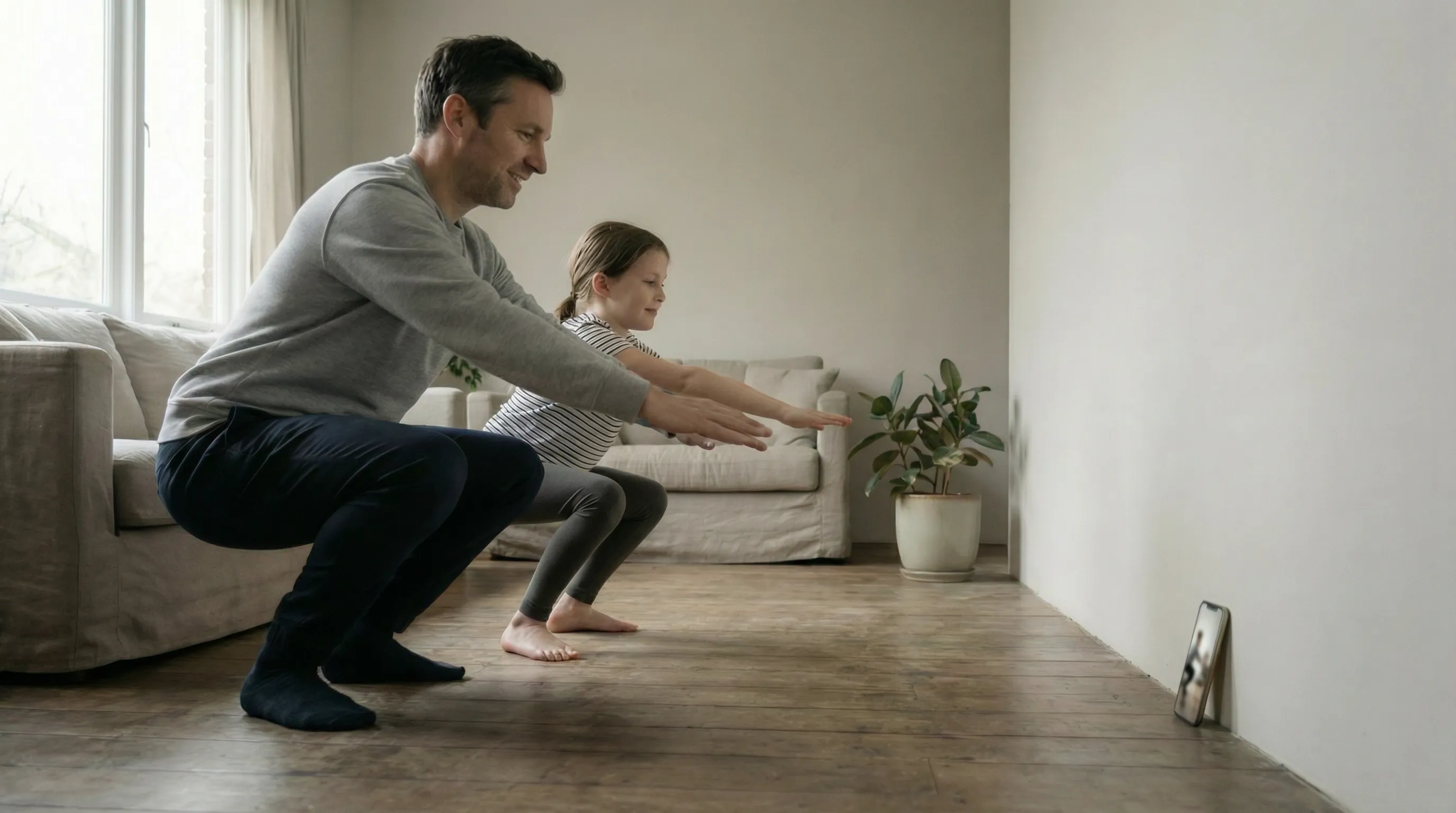
What if you could not open Instagram until you did ten push-ups?
Not as punishment. Not as a productivity hack. Just a simple rule: movement first, screens second.
It sounds almost too simple to work. But this one change addresses the core problem with screen time that limits, blockers, and willpower never solve. It makes the healthy choice automatic instead of optional.
Why Limits and Blockers Keep Failing
You have probably tried the usual approaches. Time limits. App blockers. Screen-free hours. Promises to yourself or rules for your kids.
They work for a while. Then they stop working.
The problem is that these methods fight the symptom, not the cause. They try to restrict access to something your brain (or your child’s brain) genuinely wants. Willpower can hold the line for a few days, maybe a few weeks. Then stress hits, or boredom creeps in, and the limits collapse.
Earning screen time works differently. It does not restrict. It redirects.
The Real Problem: Screens Replace Movement
Think about what screens actually displace. Not just time. Movement.
Every hour on a phone is an hour not walking, not stretching, not playing, not exercising. The body was built to move. Screens make sitting the default. According to the CDC’s Physical Activity Guidelines, adults need at least 150 minutes of moderate activity per week, and children need 60 minutes daily. Over time, the screen-movement imbalance affects mood, sleep, focus, and physical health.
For kids, the effect is even more pronounced. The American Academy of Pediatrics emphasizes that children need movement for development, emotional regulation, and learning. When screens fill the gaps, movement disappears first.
Earning screen time fixes this at the source. Movement is no longer optional. It is the price of admission.
How Earning Changes the Equation
When screen time has to be earned, the dynamic flips.
You are not restricting something desirable. You are connecting it to something beneficial. The screen is still the reward. But now movement comes first.
This works because it aligns with how habits actually form. As behavioral scientist BJ Fogg from Stanford has shown, behavior follows reward and environment design. When movement unlocks the reward, movement becomes automatic. You stop having to convince yourself (or your kids) to exercise. The system handles it.
What This Looks Like for Adults
You wake up. Before you can check your phone, you do twenty squats. Takes about a minute. Now you have earned twenty minutes of screen time.
You want to scroll Instagram during lunch. Ten push-ups first. Done. Now scroll.
You are about to fall into a YouTube rabbit hole after work. A quick plank earns you the time. You watch your videos, but you also moved.
The rule is simple: one rep earns one minute. Or one minute of movement earns one minute of screen time. The math is easy. The habit builds itself.
What This Looks Like for Kids
Your child wants the iPad. Instead of asking you, they do jumping jacks. The app counts them. When they finish, they have earned their screen time.
No negotiation. No begging. No guilt. The rule is the same every time: movement first, screens second.
Over time, something shifts. Your child stops asking you for permission because you are not the gatekeeper anymore. The system is. They know what is required. They do it. They get their reward.
You get to stop being the bad guy who always says no.
Why This Works When Other Methods Fail
Limits require enforcement. Blockers can be bypassed. Willpower depletes.
Earning works because it changes the structure, not just the rules. The reward is still there. The path to it just goes through movement first.
This aligns with how your brain actually works. You are not fighting the desire for screens. You are channeling it. The craving becomes the motivation to move.
The System That Makes It Automatic
The concept is simple. The challenge is consistency.
You could try to enforce this rule manually. Track reps. Monitor screen time. Decide if the movement was enough. But that requires effort, and effort fades.
This is where Scrolletics helps.
The app connects screen access directly to physical movement. You do the exercises. The phone recognizes them automatically. Minutes are earned. No tracking required. No willpower depleted. The system handles it.
For adults, it breaks the mindless scrolling habit by inserting movement into the loop. For kids, it removes parents from the enforcement role entirely. The rule is the rule. The app enforces it.
What Changes When You Start Earning
Screen time stops feeling like a battle. For you or your kids.
Movement becomes automatic because it is required. Screen use becomes intentional because it follows effort. The guilt fades because you are not fighting yourself anymore. You are following a system.
What if screen time had to be earned? Try it. The answer might surprise you.
Frequently Asked Questions
How does earning screen time work?
Instead of setting time limits or using blockers, you complete a physical activity before accessing screens. One rep of exercise earns one minute of screen time. The rule is simple and consistent: movement first, screens second. This changes screen time from a default behavior into a deliberate choice.
Is earning screen time effective for kids?
Yes. When children earn screen time through movement or chores, it removes parents from the role of constant enforcer. The rule is always the same, so kids stop negotiating. The American Academy of Pediatrics recommends connecting screen time to healthy behaviors rather than relying on strict time limits alone. For more ideas, see our guide on how kids can earn screen time.
Why does earning screen time work better than screen time limits?
Limits require constant enforcement and willpower, which deplete over time. Earning works because it changes the structure rather than fighting the desire for screens. The craving for screen time becomes the motivation to move. Research in behavioral psychology shows that connecting a reward to a prerequisite action builds stronger habits than restriction alone. Learn more about why willpower fails and what works instead.
What is Scrolletics and how does it help earn screen time?
Scrolletics is an iOS app that connects screen access directly to physical movement. You do exercises like push-ups, squats, jumping jacks, or planks, and your phone counts reps automatically using on-device camera detection. No recording, no uploads, fully private. One rep earns one minute. It works for adults and kids, removing the need for constant parental enforcement.