

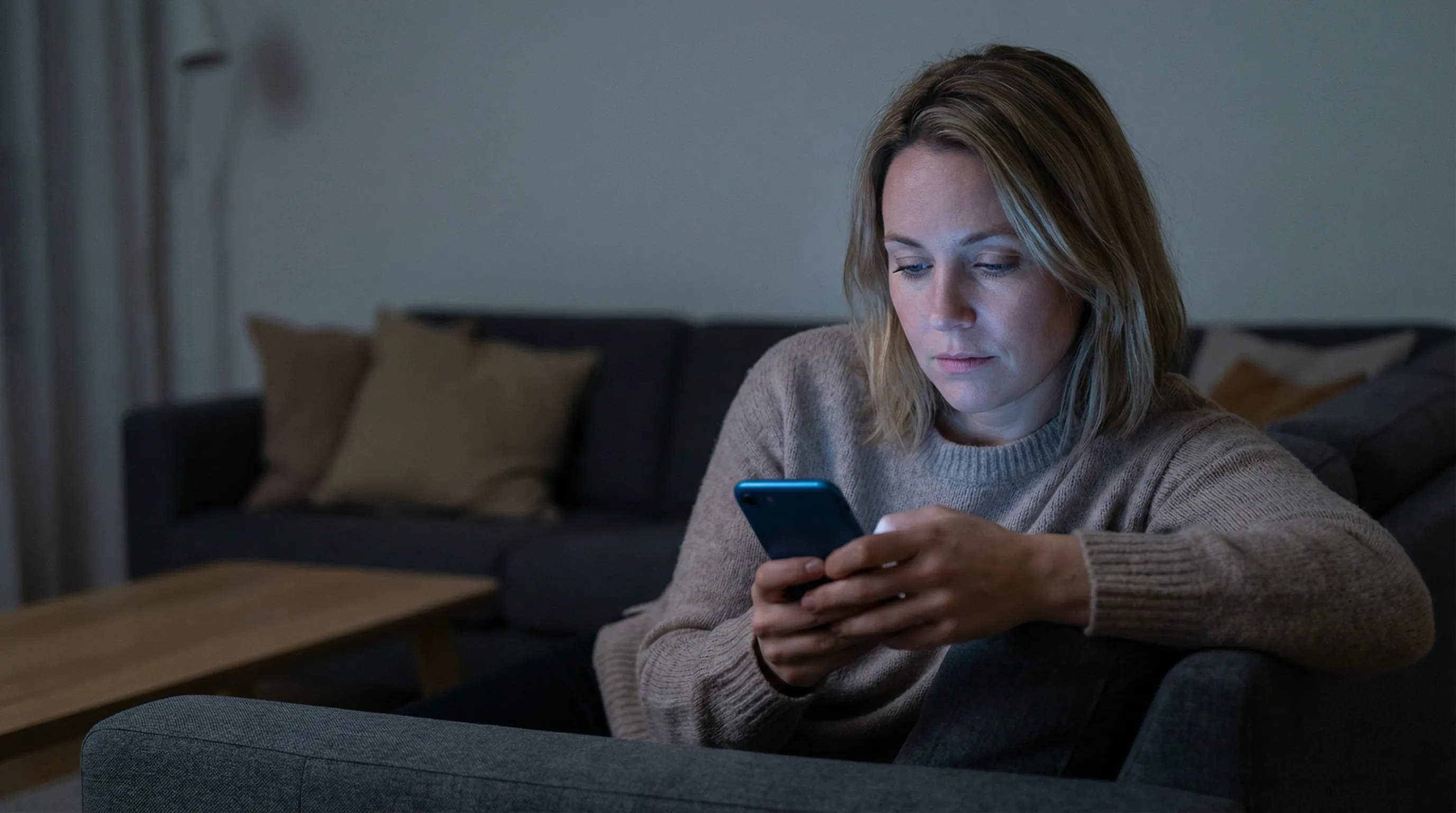
Every day, millions of people fall into the same pattern without realizing it.
They pick up their phone just for a minute, then look up much later wondering where the time went and why they feel worse than before.
This behavior is now widely known as doomscrolling. It refers to the compulsive habit of endlessly consuming negative or anxiety-inducing content on phones and social media. The term gained widespread use during the COVID-19 pandemic, and research from the American Psychological Association has since linked this pattern to measurable increases in stress and anxiety. What looks harmless at first can quietly turn into a deeply ingrained habit.
What Doomscrolling Really Is
Doomscrolling describes the tendency to keep scrolling through bad news, alarming headlines, or emotionally charged social feeds even when it causes stress or anxiety. The term became popular during the COVID-19 pandemic, when people constantly checked for updates and found themselves trapped in a loop of information.
Researchers now recognize doomscrolling as a behavioral pattern with measurable psychological effects, not just a casual habit. A 2021 study published in Computers in Human Behavior found that doomscrolling was significantly associated with increased anxiety, greater fear, and poorer overall mental health.
Why Doomscrolling Feels So Hard to Stop
The human brain evolved to search for information about threats. In uncertain situations, checking for updates feels like regaining control. This instinct once helped humans survive.
Modern technology exploits this instinct. Infinite scroll, autoplay, and algorithm-driven feeds continuously serve content designed to keep attention for as long as possible. As the Center for Humane Technology has documented, these design patterns are intentionally engineered to maximize engagement. The result is a feedback loop that rewards checking again and again.
Behavioral scientists increasingly compare excessive scrolling to addictive behaviors because of how repetitive, automatic, and compulsive it becomes. The mechanism mirrors what psychologist B.F. Skinner identified as a variable-ratio reinforcement schedule, the same principle that makes slot machines so compelling.
The Mental and Physical Cost of Doomscrolling
Doomscrolling does more than waste time.
People who regularly doomscroll report:
- Increased anxiety and chronic stress
- A distorted sense of danger or negativity in the world
- Difficulty relaxing or sleeping
- Lower overall mood and focus
There is also a physical cost. Doomscrolling usually means sitting still for long periods. According to the World Health Organization, sedentary behavior is one of the leading risk factors for chronic disease. Over time, this contributes to poor posture, muscle tension, headaches, reduced circulation, and other health risks associated with a sedentary lifestyle.
Those daily hours compound. The Screen Time Calculator takes your daily screen time and shows the total in days per year and years per lifetime. The personal number tends to land harder than any general statistic.
Why Willpower Alone Rarely Works
Most advice about screen addiction sounds simple:
- Set limits.
- Use blockers.
- Take a digital detox.
But these approaches often fail because they focus on restriction instead of replacement. Doomscrolling usually starts when someone feels stressed, bored, or mentally overloaded. The phone becomes a coping mechanism, not just entertainment.
Telling people to stop without offering an alternative leaves the underlying need unmet.
Lasting change works better when a habit is replaced with another action that still satisfies the brain’s desire for stimulation and reward.
Why Movement Interrupts Doomscrolling
What the brain is really seeking is dopamine. Dopamine is released when we achieve something, complete a task, or move our bodies.
Scrolling offers quick dopamine with almost no effort. Physical movement offers deeper, longer-lasting rewards but requires intention.
Short bursts of activity like push-ups, squats, jumping jacks, or planks activate the nervous system, improve circulation, and reset attention. Movement breaks the scrolling loop by giving the brain what it actually needs.
A Smarter Way to Think About Screen Time
Instead of asking, “How do I stop using my phone?” a better question is:
What if screen time had to be earned?
That idea is the foundation of Scrolletics.
Rather than blocking screens or relying on willpower, the app connects movement with access.
You exercise first. Then you unlock screen time.
A few push-ups earn a few minutes. A plank unlocks the next scroll session. Movement becomes the gateway instead of an interruption.
This approach works for adults who want better habits and for parents who want a healthier way to manage kids’ screen time.
The goal is not to eliminate screens. The goal is to stop letting them replace movement.
If you’ve ever caught yourself scrolling without meaning to, this is a simple place to start.
Try earning your screen time through movement.
Frequently Asked Questions
What is doomscrolling and why is it addictive?
Doomscrolling is the compulsive habit of endlessly scrolling through negative or anxiety-inducing content on your phone. It is addictive because social media platforms use infinite scroll, autoplay, and algorithmic feeds that exploit your brain’s dopamine system, the same reward mechanism involved in gambling addiction. Your brain keeps seeking the next piece of content because the reward is unpredictable.
What are the mental and physical effects of doomscrolling?
Doomscrolling increases anxiety, distorts your perception of danger, disrupts sleep, and lowers mood and focus. Physically, it contributes to poor posture, muscle tension, headaches, and reduced circulation from prolonged sitting. Research from the American Psychological Association links excessive screen time to chronic stress. For a deeper look at the health consequences, see our guide on the effects of excessive screen time.
How can I stop doomscrolling without relying on willpower?
Replace the habit instead of restricting it. Movement is the most effective replacement because it provides dopamine through a healthier pathway, breaks the scrolling loop, and leaves you feeling better. Read more about how to stop doomscrolling without willpower. Apps like Scrolletics connect screen access to physical exercise. You do push-ups, squats, or planks to earn screen time minutes, making movement automatic instead of optional.
What is Scrolletics and how does it help with doomscrolling?
Scrolletics is an iOS app that blocks distracting apps and requires physical exercise to unlock them. Your phone’s camera counts reps automatically using on-device pose detection. No recording, no uploads, fully private. One rep earns one minute of screen time. It works for adults who want to break the scroll habit and for parents managing kids’ screen time.